(function(w,d,s,l,i){w[l]=w[l]||[];w[l].push({'gtm.start': new Date().getTime(),event:'gtm.js'});var f=d.getElementsByTagName(s)[0], j=d.createElement(s),dl=l!='dataLayer'?'&l='+l:'';j.async=true;j.data-privacy-src= 'https://www.googletagmanager.com/gtm.js?id='+i+dl;f.parentNode.insertBefore(j,f); })(window,document,'script','dataLayer','GTM-MF9T2HG');

5 STEAM Activities Every Family Should Try

Everyone seems to be talking about STEAM education, and for good reason. 

Many parents will already be familiar with STEM, which brings together Science, Technology, Engineering and Mathematics. STEAM places the Arts more centrally within this learning experience. Both approaches foster creativity, communication, design thinking and problem-solving, and are most powerful when these disciplines are connected rather than explored in isolation. 

At Sydney Catholic Schools (SCS), this learning comes to life through opportunities such as SCS STEM MAD, part of the national STEM MAD (Make A Difference) competition. Each September, students across our system develop and share innovative projects that apply their knowledge and creativity to real-world challenges. 

More than a competition, STEM MAD encourages students to view the world with empathy and identify ways to support others, care for our environment and make a positive difference. Reflecting Pope Francis’ Laudato Si’ and its call to care for our common home, students discover that their creativity, innovation and STEM skills can be used to develop meaningful solutions and positively impact the world around them.  

As Christine McDonald, Education Officer: K-6 (STEM) Curriculum & Innovation at SCS explains, “Importantly, STEM and STEAM don’t have to be confined to the classroom. Families can create authentic learning experiences at home that often look and feel like play, while developing a deeper understanding and appreciation of the world around them.” 

 Here are a few tips to get you started… 

Science: Become a Backyard Investigator 

Nature is the perfect outdoor laboratory. 

Younger children can create a nature journal, observing insects, birds or plants in the backyard or local park. Older students can …
Four fun STEM activities to build science skills at home

When it comes to science experiments, the classic baking soda volcano is a rite of passage.

To keep the learning excitement going beyond the volcano, Sydney Catholic Schools is sharing four fresh, fun, and hands-on ideas to get your child’s interest in STEM (Science, Technology, Engineering, and Mathematics) truly exploding with curiosity.

Whether your child is a budding scientist, tech whiz, builder, or mathematician, these simple activities will spark young minds and make STEM feel lively and accessible – no smoke or lava required.

Science: Kitchen chemistry that bubbles with surprise

Cooking is a fantastic gateway to fascinating science, packed with real-life chemical reactions that kids can see, touch, and even taste! 

Instead of the usual baking soda volcano, try making homemade butter by shaking cream in a jar. It’s delightfully messy, hands-on, and a delicious way to watch science come alive right before your eyes. Even better, it’s an experiment you can eat afterwards!

Pro tip: Talk about how movement causes liquids to change form and let your child explore the process hands-on.

Technology: Level up their coding skills

Transform screen time into a powerful creative challenge by immersing your children in coding projects that develop valuable, real-world skills. Platforms like Scratch and Python give teens the opportunity to bring their ideas to life by designing games, animations, apps, or even websites. 

These tools blend logical thinking with creativity, encouraging hands-on problem-solving, experimentation, and iterative learning (process with repetitive actions), skills that are highly sought after in today’s digital world. Coding not only sharpens technical abilities but also unlocks new ways to express and innovate.

Pro tip: Take coding offline by writing “programs” for friends to follow, like creating a treasure hunt with step-by-step instructions. Debugging mistakes and improving your code is where …

Robots, reefs and real-world skills: STEM in action at SCS

When many people think of STEM, they might picture a few bunsen burners in a science lab, but at Sydney Catholic Schools (SCS), we really turn up the heat when it comes to innovation.

From ocean floors to robotics arenas and chemistry competitions, SCS students tackle real-world challenges with creativity, curiosity, and cutting-edge skills.

Through hands-on learning and innovative programs, STEM (Science, Technology, Engineering and Mathematics) comes alive across the system, equipping today’s learners for tomorrow’s opportunities.

Bringing STEM to life across land and sea

At Our Lady of the Sacred Heart College (OLSH) Kensington, students step beyond the classroom and dive into Sydney Harbour through their Marine Studies course. Rather than just reading about reefs and marine ecosystems, they set sail on wind-powered vessels, feeling the breeze and waves firsthand.

This immersive experience deepens their grasp of forces shaping marine life, from wind dynamics to buoyancy, mirroring physics concepts behind coral reefs.

“Sailing allows students to feel the force of the wind, see lift in action, and understand stability through movement, making physics not just understandable, but unforgettable,” says Daniel Levitt, Director of Entrepreneurship, Learning Pathways and Partnerships at OLSH.

Navigating shifting winds, students apply lessons in fluid dynamics and marine safety, sharpening critical thinking and teamwork. For many, this first journey on a wind-powered vessel sparks a deeper connection with the environment and commitment to protecting Australia’s fragile reef ecosystems.

Robotics, coding and competition

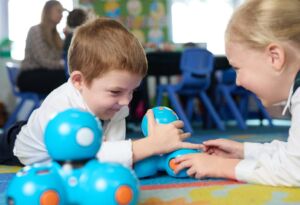
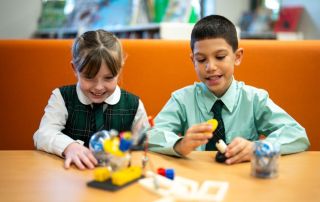
At St Anne’s Catholic Primary School Strathfield South, Year 2 and Year 3 students immerse themselves in coding and robotics through the Dash Robots program. Working in teams, they tackle complex challenges that demand problem-solving, mathematical reasoning, and clear communication.

For Year 4 students, the …

Boost young minds with Science and Technology

Ever wondered how your child’s endless curiosity and boundless energy can be the foundation for a future in science and technology? Imagine transforming their natural wonder into a love for Science and Technology right from your living room. Intrigued? Keep reading to discover the secrets for making your home a launchpad for future scientists, engineers, and tech entrepreneurs!

Why Science and Technology is the future (and why it matters to you!)

Science and Technology jobs are growing like wildfire – expected to soar by over 12% in the next five years! That’s twice as fast as other careers. But what does that mean for you and your kids? It means a world full of opportunities for scientific thinkers. Observing, questioning, testing, and communicating – if this sounds like your child, you’re already halfway there!

Transforming everyday moments into adventures in Science and Technology

  1. Cooking up science in the kitchen

Turn your kitchen into a science lab! Measuring ingredients is a sneaky way to practise maths. Breaking down a recipe? That’s computational thinking in action! Try this: mix baking soda and vinegar for a fizzy volcano or colour celery water to see capillaries in action. Cooking just became a whole lot more exciting!

  1. Experimentation nation

Got vinegar and an egg? Cover the egg in the vinegar for 48 hours and watch the shell dissolve and reveal a bouncy egg! Or mix corn flour and water into a paste to make Oobleck, a great example of a non-Newtonian fluid that is a lot of fun to play with. These fun experiments teach chemical reactions and biological processes effortlessly. Who knew learning could be this fun?Young students practise digital skills with robots in the classroom.

  1. Nature’s lab – …

Domremy’s light focus brightens hearts and minds

Light-themed projects at Domremy College Five Dock have brightened the minds of gifted students in the Sydney Catholic Schools (SCS) network and provided help to families in Papua New Guinea (PNG) living in energy poverty.

Lights for learning

With only 20 per cent of PNG’s 10.5 million residents able to access electricity, school students must rely on dangerous and unsustainable sources of fuel –  like kerosene, diesel, wood or candles – to study after dark.

To help improve the situation, Domremy student volunteers have built 50 solar-powered lights as part of the Origin Energy Foundation’s Solar Buddy light initiative.

“We are very proud of all students who gave their time to become more aware as global citizens and make a difference,” – Sarah Thompson

The Solar Buddy project marries STEM and social justice to improve the health and education outcomes of people living in energy poverty around the globe. The lights will be shipped to PNG.

Domremy’s Leader of Innovative and Global Connections, Sarah Thompson, praised the efforts of the students involved in an emotive letter to the Domremy community that acknowledged the severe impacts of energy poverty around the world. 

The Solar Buddy initiative was led by the school’s Environment and Humanities captains, with students writing a heartfelt letter to accompany each light.

“We are very proud of all students who gave their time to become more aware as global citizens and make a difference,’” Ms Thompson said.

“We would like to thank the team of volunteers from Origin Energy Foundation for their financial and personal support throughout this project.

“We hope to maintain this relationship and continue to make a difference in the lives of those in need.”

Let there be light

New festival shines light on learning

Move over Vivid – there’s a new light festival in Sydney!

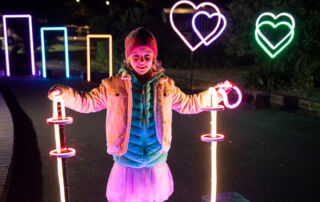
More than 2,000 people attended Domremy College Five Dock’s first-ever Light Festival, complete with a glow bar, silent disco and inspiring light-themed student works.

The two-hour event in late June celebrated a term’s worth of learning in STEM, humanities and the arts.

Spotlight on learning

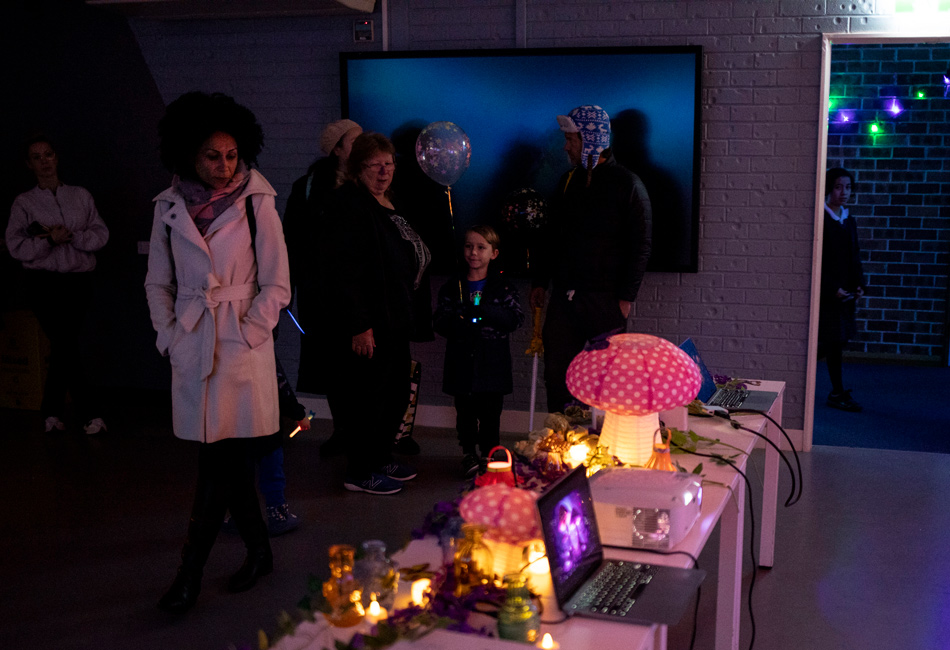
A display featuring glowing mushrooms at Domremy's College's festival of light. The college Science labs featured light experiments including open flames, refractions and holograms.

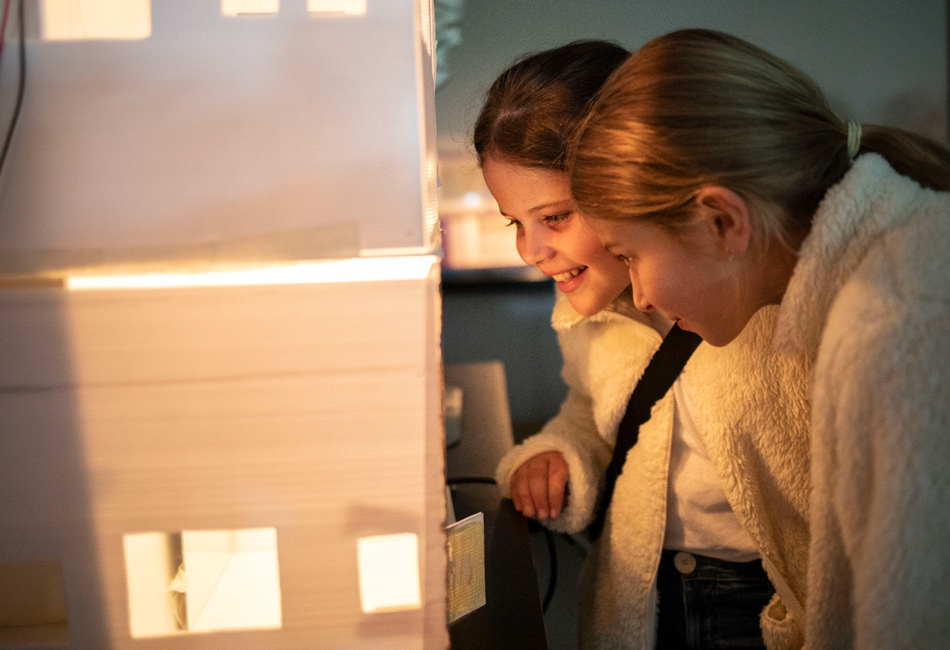
Year 9 students at Domremy and Year 5 students from four nearby Catholic primary schools explained what they learnt about the principles of light and architecture while designing model houses. 

Their works were part of a Science project for Newman Selective Gifted Education Program students at Sydney Catholic Schools.

Bold and bright installations by the college’s Design and Technology students included sea jellies, puzzle pieces and an octopus named Eugene.

Music and Drama students entertained with musical performances and expressionist theatre performances enhanced by strobe and other lighting effects.

English teachers screened a video of students’ blackout poetry (made by removing words from newspaper clippings with black marker) and ekphrastic poetry, named for the Ancient Greek practice of describing things in vivid detail.

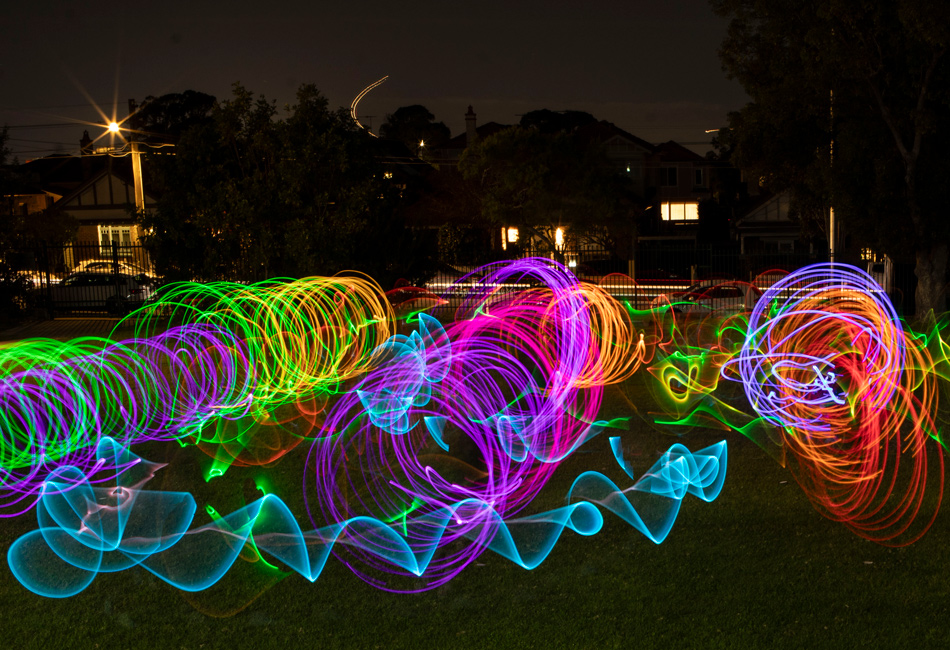
Colourful swirls of light in the school oval from Domremy College Five Dock's Festival of Light.

Instructional Specialist at Domremy, Lucy Silva, said the college arranged for a renowned Photographic Light ‘painter’ Peter Solness to work with students on the school oval to capture light in movement.

“The results were simply spectacular!” Mrs Silva said. “The …

Student STEM inventions to embrace this summer

Whether you are pondering how to stay sun and heat safe this summer, help injured wildlife, or alleviate shoulder pain, these STEM MAD National innovations of 2023 created by students at Sydney Catholic Schools have answers.

The competition asks Catholic primary and secondary school students across Australia to apply Science, Technology, Engineering and Mathematics principles and Gospel values to identify and solve a real-world problem.

Each of the projects below also draws on research, ingenuity, and the United Nations Sustainable Development Goals to create a measurable positive impact on personal and environmental health.

The Sun Brush

The creator: Lilah Brock, Holy Family Catholic Primary School Menai

Sustainability goals: 3 – Good health and wellbeing, 13 – Climate action

Lilah’s Sun Brush is a sunscreen applicator designed to be quick and easy to use and helpful for children with sensory issues. Engineering and mathematics were strong in her work, with a prototype brush made of hard plastic and soft pony hair. 

Lilah received the Best Application of Maths in Context Award – Primary for her project which involved calculating how many millilitres of sunscreen the Sun Brush could hold.

She was also a finalist in the Best Innovation for Health Award.

Lilah said about 15,000 people get skin cancer in Australia each year, a statistic which inspired her invention.

“When I went to the beach I saw so many people sunburnt or really red,” she said.

“I thought to myself ‘why are people not wearing sunscreen?’”

“We surveyed our local community and found most people would prefer using a brush applicator for …

Student STEM MAD initiatives take out national awards

A digital weather data and water conservation system was among six outstanding Sydney Catholic Schools projects to pick up awards at the 2022 STEM MAD Nationals.

Our award-winning schools were St Clare’s College Waverley, St Kevin’s Catholic Primary School Eastwood, Good Shepherd Catholic Primary Hoxton Park, Clancy Catholic College West Hoxton, and St Aloysius Catholic Primary School Cronulla.

St Aloysius Cronulla picked up two major awards – the STEM MAD National Award (Primary) and Best Application of Maths in Context Award (Primary) – for their digital innovative weather data and water conservation system.

The project team consists of Year 6 students Flynn Coady and Kate Middlemiss and Year 5 students Isla Whitford and Patrick Hughes.

Over the past five years the budding entrepreneurs have worked with their local council, industry experts and Sydney Water to develop a solution to prevent high salinity levels from impacting local playing fields and golf courses.

Their research included connecting via Skype with a meteorologist in the University of Oklahoma.

‘OUR STUDENTS MAKE A REAL DIFFERENCE’

“This project has developed over a number of years and each year the students display greater skill and understanding in developing clever solutions that ensure water use efficiency and sustainability,” Elizabeth Ovens, Principal of St Aloysius Cronulla, said.

“We believe our students make a real difference as we are working with industry professionals on real problems involving recycled water use in our local area, using our STEM skills.”

MORE MAJOR AWARD WINNERS

St Clare’s College Waverley Year 9 student Marianna Quintero Zuniga picked up the Best Integration of Technology Award (Secondary) for her pop up learning pod project.

Major award sponsors, SEAM (Social Enterprise Asset Management), gave their award ‘STEM for …

STEM project gives clean water to refugees

Students at McAuley Catholic Primary School Rose Bay showed that their sense of social justice runs deep by assembling emergency water filters for use in central African refugee camps.

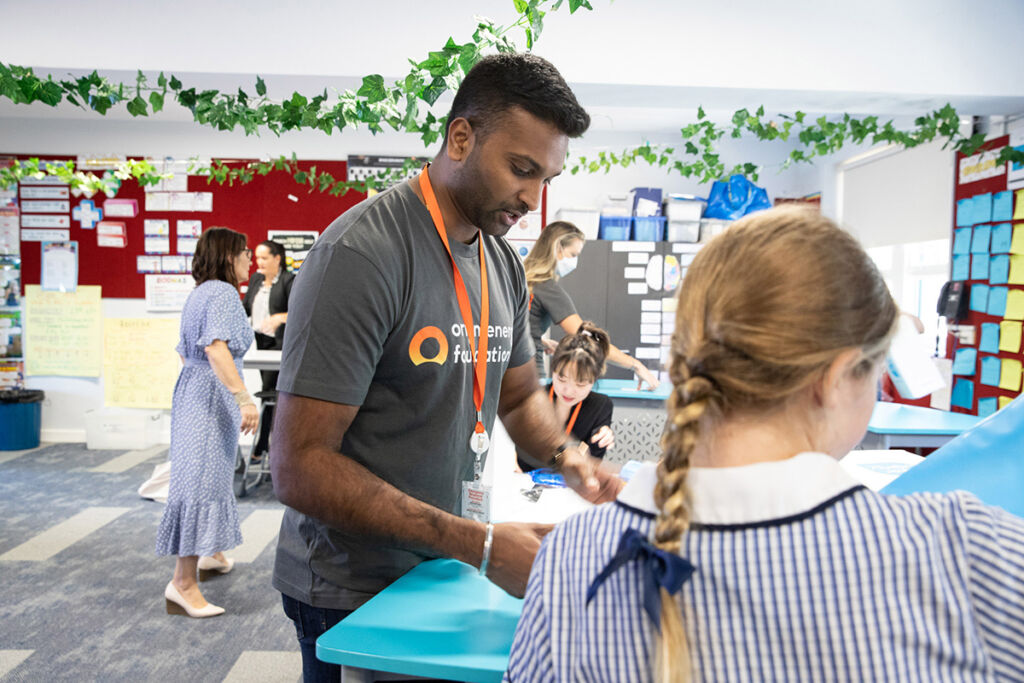
The year 5 and 6 students drew on the scientific principles of water filtration to build the filters with volunteers from the Origin Foundation’s water works program on World Water Day.

McAuley students make emergency water filters with Origin Foundation volunteers and principal Nicole Jones.The students also learnt about the health impacts of poor water accessibility and sanitation on communities around the globe hit by conflict and natural disasters. They also came up with the designs for more permanent water filters.
Principal Nicole Jones said the project empowered students to think and act as global citizens, and to help reduce outbreaks of water-borne disease.

“Our students will effectively be improving the health and well-being of an entire community” – Nicole Jones

Real-world impact

The filters will be delivered to communities in Uganda by the foundation’s partner charity Lifewater, which teaches them how to install and use the devices.

“It’s so wonderful for our students to take on this challenge and make a big difference with a tangible solution like a water filter device to help improve the lives of others who are less fortunate,” Mrs Jones said.

“The Water Works program teaches our students that STEM is very much a part of addressing world issues and that they can be part of the solution.”

McAuley students make emergency water filters with an Origin Foundation volunteer.

Love of physics a bridge to award

A holiday musing when travelling across San Francisco’s Golden Gate Bridge has turned into a STANSW Young Scientist Award for Year 11 student Hayden Westwood.

The Science Teachers’ Association of NSW (STANSW) Rowe Scientific Depth Study Bronze Award recognises Hayden’s examination of how resonance – a phenomenon linked to the natural vibration frequency of objects – affected the Tacoma Narrows Bridge collapse.

The Washington-based suspension bridge famously fell into the Puget Sound during a windstorm in 1940. It is similar in construction to the Golden Gate Bridge.

“I feel very happy and privileged to receive an award for something I really enjoyed researching,” Hayden, of St John Bosco College Engadine, said.

“Overall the project was an interesting experience, with the results showing that there was a resonance effect on the bridge” – Hayden Westwood

Hayden said project highlights included building a model of the bridge, researching various professors’ estimations on the collapse and problem solving how to allow for a constant mechanical vibration to test his hypothesis. He attached a massage gun to an apparatus as a solution.

Hayden said his interest in Physics stemmed from a love of Mathematics, a subject he has been accelerated in by two years since Year 1.

“I have been very fortunate to have had awesome Mathematics and Science teachers throughout my education, especially Mr Shiel and Mr Balzarano, that have allowed my passion for physics to flourish,” he said.

“Putting all the parts together in a report was a challenge that was really enjoyable” – Hayden Westwood

ABOUT THE AWARD

The STANSW Young Scientist Awards is a major project of the Science Teachers’ Association of New South Wales (STANSW). It has been running since 1992 …

Clancy student scoops design gong

Clancy Catholic College West Hoxton student Ava Eden has been named the winner of the 2020 Technology Education Challenge (TECx) – the largest online design challenge for students studying technology education in Australia.

The challenge required students to submit a concept that would help solve one of the complex and critical world problems highlighted by the United Nations’ Sustainable Development Goals.

Ava’s innovative water distribution system concept –  which assists in solving issues relating to water availability during periods of drought in Australia – was deemed the winner after receiving the most votes.

The Year 8 student also received her very own brand-new 3D printer for taking out first place.

Doing it for the country

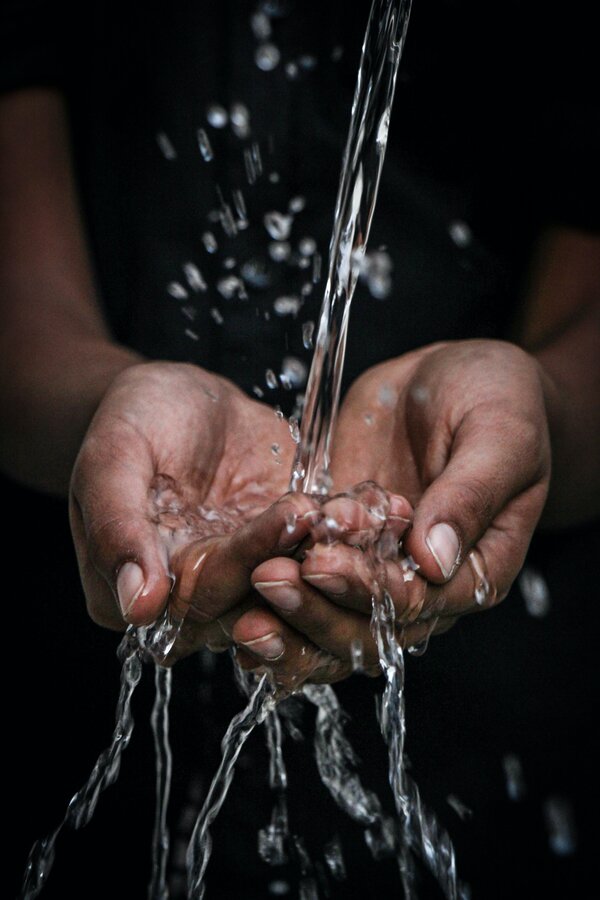
Hands catching water

Ava’s concept featured a design for a mechanism that would capture rainwater in areas of Australia that experience high rainfall and would then redistribute that water to drought-affected areas of the country.

Ava said her idea was prompted by the need for Australians to act on climate issues which could soon become irreversible.

“Australia has been going through so many natural disasters in the last few years including drought and the bushfires, and I saw how much this has impacted the environment and the wildlife,” Ava said.

“I really wanted to think of an idea that could reduce this impact and help this problem.”

“The system I developed was a way I could help to take urgent action to combat climate change and its impacts here in Australia” – Ava Eden

A knack for design

Ava, who is part of the Newman Selective Gifted Education Program in her school, spent months conceptualising …

November 15, 2021|

Judges go wild for animal design

St Michael’s Catholic Primary School Belfield student Marcus Joukhador has won Taronga Zoo Sydney’s STEM Enrichment Design competition.

The competition required students to research, design and build an animal enrichment object for the zoo’s pygmy marmoset enclosure.

Taronga Zoo keepers, behavioural scientists and educators were among the judging panel who selected the Year 2 student’s design as the best of 70 entries submitted.

Excitingly, Marcus, his family and his entire class have now been invited to Taronga Zoo where they will get to see his design placed into the enclosure.

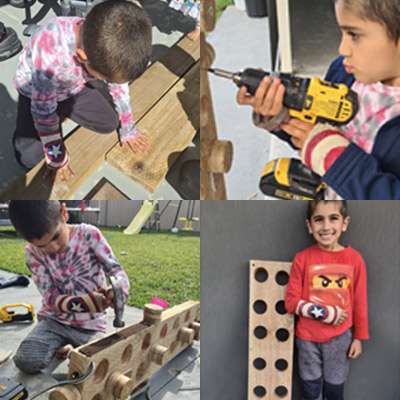
Marcus was hands-on during the construction process.
WILD WITH EXCITEMENT

Marcus said that being able to watch the pygmy marmosets enjoy his design first-hand will be a special experience.

“I don’t think I have any words for it – it will be a more than proud moment” – Marcus Joukhador

“I felt so excited because it was my first time entering a competition and to win it was awesome,” Marcus said.

IT’S ALL IN THE DETAILS

As part of the project, Marcus submitted a comprehensive seven-page document that analysed the pygmy marmoset’s habitat, diet, appearance and behaviour.

He described his findings from websites and videos, and was even inspired by watching his baby cousin interact with the different features on his sensory mat.

From his research, Marcus then sketched out his idea onto paper, making sure that his design ticked all the safety and construction requirements.

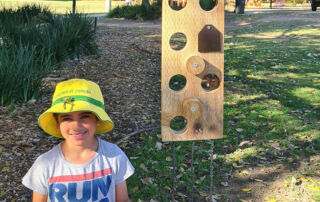
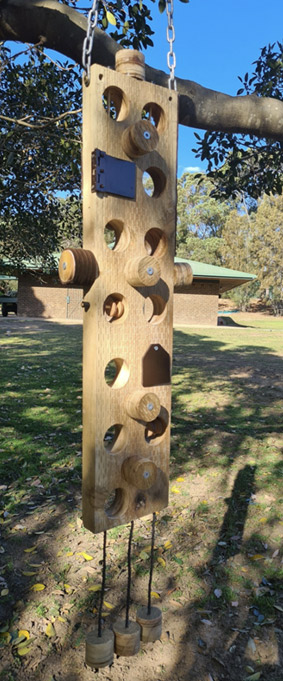
Marcus’s hanging board.

THE FINISHED PRODUCT

Marcus’s final design was a timber hanging activity board that promotes and stimulates the physical and mental health of the pygmy marmoset.

It features sensory blocks, swinging doors, hidden mirrors, food skewers and even includes a natural wooden abacus.

Marcus was hands-on in building the board, helping to drill the attachments and sand down …

Tournament of Minds: St Agnes’ top honours

St Agnes’ Catholic Primary School Matraville students have achieved honours in their first foray into problem-solving competition Tournament of Minds.

In the tournament’s NSW regional final, two teams of St Agnes’ students maintained creativity and focus in two of the four six-week challenges: STEM and the Arts.

The participating students were in Years 4, 5 and 6. 

ABOUT THE COMPETITION

Each challenge asks teams to think flexibly and to create and collaborate without input from their teachers, parents or peers to solve a problem. 

In light of COVID-19, they presented their work via two videos after working remotely for the duration of the challenge.

“I learned so much from my STEM task, which made me love science even more” – Olivia Clausen

View St Agnes’ Tournament of Minds STEM challenge entry

ENTHUSIASM, PERSISTENCE, CREATIVITY 

St Agnes’ STEM team created three unique objects meant to communicate to other life forms in space, after researching the voyager golden records and pioneer plaques sent on spacecraft in the 1970s to seek extraterrestrial life. 

The Arts team created an animation to teach students about Art History, and presented their view on whether technology should be used to teach the arts in future.

“It was exhilarating and exciting to see the students engage in this challenge with enthusiasm, persistence and creativity,” said Catherine Millazzo, one of the school’s challenge facilitators.

“We are so proud of them and happy to see them receive public recognition for their effort and achievement”- Catherine Millazzo

“The challenges guide students through a hierarchy of thinking, moving from knowing through to creating and evaluating,” Ms Millazzo said. 

“This helped them to develop strong learning behaviours that could support them throughout their schooling years and into …

Thrifty duo win Techgirls award

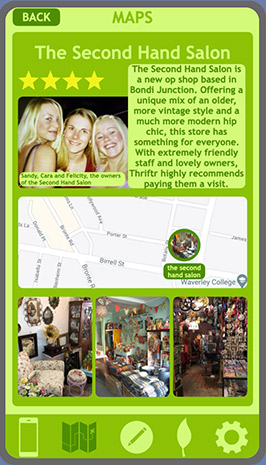
St Clare’s College Waverley students Suki Waddel and Olivia Zammit are set to take the world of fast fashion head on after their app, Thriftr, was named the winner of the 2021 Techgirls Competition.

The app – which helps users locate second-hand clothing in their area – took out the NSW Secondary School category and was also named the winner of the overall National Competition.

The competition is part of the Tech Girls Movement Foundation, an organisation that campaigns for a future where women will lead and innovate across STEM (Science, Technology, Engineering and Mathematics) fields.

It represents a fantastic achievement for the Year 9 duo, who were inspired to create the app after seeing the negative impacts that fast fashion is having on the environment, people and the fashion industry.

User interface of Thriftr app The app helps users locate sustainable fashion in their area
The start of something special

The pair, who spent three months coding and designing the app, said the idea for Thriftr first came about after participating in a Tech Girls workshop through school.

“Our STEM elective offers our class many activities and workshops that come from outside of the school,” Olivia said.

“One of these workshops was from Tech Girls, where we had to make a small idea to solve a global problem.”

Suki said that even after the workshop ended, “we were still really proud and interested in this app we had come up with.”

“When we had the opportunity to take it further, we both jumped at the chance” – Suki Wadel

For the good of the planet

Both fiercely passionate about the environment, the girls designed the app with the goal of targeting young adults and helping to foster a more positive attitude towards sustainability among their peers.

“As we …

Building a greener future

Students at St Mary – St Joseph Catholic Primary School Maroubra are doing their part to make the world a better place after completing a self-guided project that saw them design and build a series of sustainable garden beds for their school.

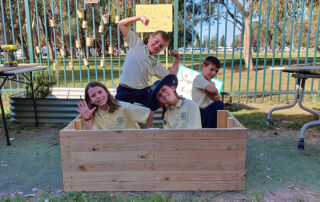
Following a planning process, which involved using a CAD (Computer-aided design) program and a 3D printer, students used old and unwanted timber sourced from local businesses to make the garden beds.

The program was first born out of a brainstorming session among the students who then engaged in inquiry-based learning to help bring their concepts to life.

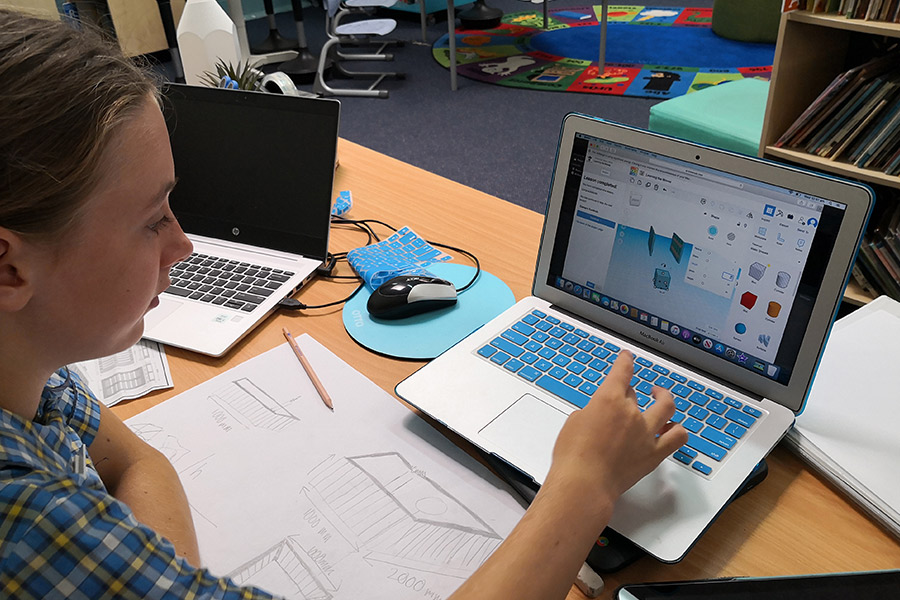
Students used a CAD program as part of the design process.
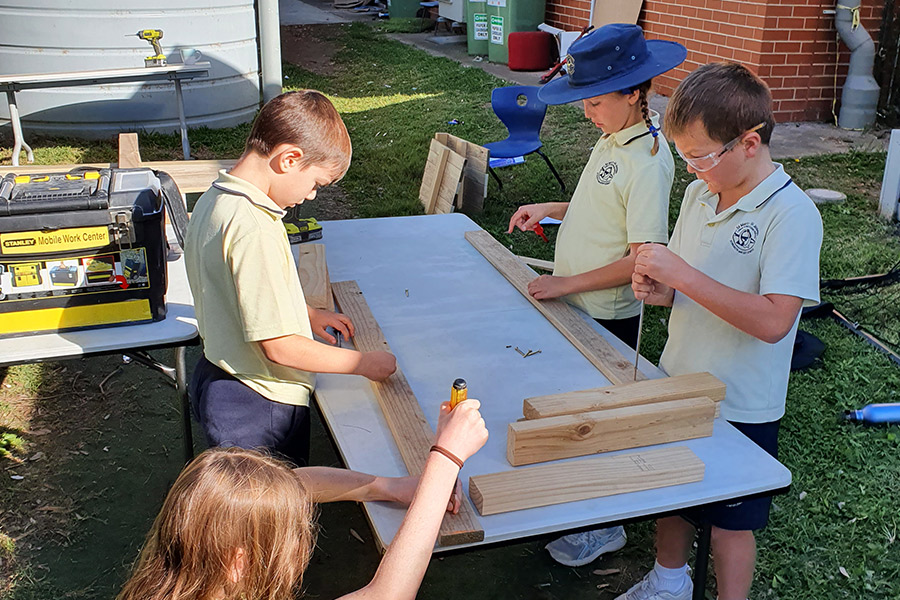
Once designs were sketched on paper, the students created a prototype using paddle pop sticks before learning how to use a CAD program to model their design which were then 3D printed to test for any design flaws.

Guided by STEM teacher, Mark Chaloner, the students then carefully constructed the garden beds which they will now fill with plants and herbs once school returns.

“We wanted to make the project as hands-on as possible to allow the students to learn through their experiences,” Mr Chaloner said.

The project aims

The project aimed to improve the school community’s attitude towards sustainability by combating five of the main environmental issues affecting our planet: climate change, habitat destruction, loss of biodiversity, food insecurity, and air and water pollution.

It also spoke to one of the school’s key improvement strategies which is to “Build whole school understanding of the general capabilities and global citizenship to empower students to live out the school motto of Strength and Gentleness and contribute to a more sustainable and ethical future.”

All hands on deck!

Importance of student ownership

Mr …

Students to grow plants from seeds that went to space

In an Australian first, students at Mary Immaculate Catholic Primary School Bossley Park have been lucky enough to be selected by the One Giant Leap Australia Foundation to germinate and grow seeds that have been to space. 

Yes, you read that correctly – space!

Seeds to space

The exciting seeds to space program is called ‘What’ll happen with the wattle??!’

One of the students involved in the project, Year 5’s Antonio Bagala, says he is looking forward to being a part of history.

“The most interesting part of this experiment is that we are able to be a part of an official project and that our school will receive seeds that have been to space” – Antonio 

In collaboration with the Japan Aerospace Exploration Agency (JAXA), the seeds lived in space for six months before returning to Japan in June and now Australia where they are in quarantine. 

The seeds were due to arrive in time for Science Week but, due to COVID-19, will now splash down in Bossley Park in a couple of weeks’ time.

Space seeds from the What’ll happen with the wattle??! project

How the project came about

Only 150 schools across Australia have been given the opportunity to grow a wattle from space, and eight are from Mary Immaculate; four are in Year 4, and four are in Year 5. 

“We want the students to take this on and be open and inquiring thinkers,” school principal, Lisa Wahab, said.

Students were chosen to be a part of this experiment after writing a proposal and creating a video. Their proposal described why they wanted to have the wattle planted at their school, including how the …

August 20, 2021|

In their own words: Careers in STEM classrooms

Meet the STEM (Science, Technology, Engineering and Mathematics) teachers whose passion and past work experience is helping students at Sydney Catholic schools achieve.

As we celebrate National Science Week, Sue Farroukh, Gavin Gant, Sylvia Eleftherides and Andrew Di Lizio share with us the career pathways that led them to our classrooms.

Sue Farroukh

SUE FARROUKH, Marist College Eastwood

– Civil engineering project lead, physics and biology teacher

I loved physics at school. For a curious kid like me it was great.

I was studying construction management at uni and had a little light bulb moment.

I wanted something more rewarding and really liked science at school, so I decided to become a physics teacher.

I worked in a big engineering firm for quite a few years.

One of our projects was to build train simulators for the new Sydney trains. With those large projects, you get a real understanding that nothing is done in isolation.

Making cross-curriculum connections is what I have taken from my work into teaching, especially with the seniors who are studying multiple sciences.

“Science answers so many questions” – Sue Farroukh

A lot of students want to be astrophysicists until they realise it’s a bunch of maths and the computers do everything now, so you’ve got to be a really good computer programmer.

Science is so broad. It’s making them aware that if they choose it as a career they’re not just going to be working in a research lab.

Vaccination

The pandemic has helped in that students see there’s someone who studies diseases, develops vaccines, studies viruses.

I tell students that even if they want to go into accounting or law, it does help to have a science under your belt because it is a different way of thinking.

Accuracy, validity and reliability are …

STEM family challenge ignites creativity

Ever tried to build something as tall as a child out of just newspaper and masking tape? Or to make a model water slide better than one at a theme park? 

More than 60 families at St Pius Catholic Primary School Enmore have embraced the STEM Family Challenge, adding another dimension to their child’s learning.

The STEM Family Challenge

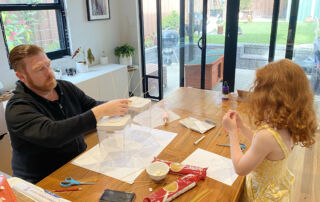
Each Monday a family is set a STEM (Science, Technology, Engineering and Mathematics) challenge and given a week to complete it. They are given a kit of minimal materials and a portfolio to record and evaluate how they solve the challenge.

The following Monday they present their work to the school as a family, answering questions about their creations.

How it started

St Pius’ STEM instructional specialist, Maryse Rodrigo, introduced STEM challenges to her Year 2 class in 2019 to cater for their diverse needs. 

“The biggest benefit I’ve seen – and we are a tiny school, so you get to see it quite closely – is that our children are starting to really think outside the box” – Maryse Rodrigo

From the initial spark in Term 1 the STEM challenge grew to incorporate literacy, and students’ reading skills grew in leaps and bounds. 

By Term 2 optional mini challenges were sent home for families to do together. 

By 2020 the whole school became involved.

“I had parents emailing me or pulling me aside in the playground (to ask) ‘My child is interested in STEM, how can I get them involved?’” Mrs Rodrigo said.

What’s involved?

“It could be something like using tape, newspaper and paddle pop sticks to create a famous landmark,” Mrs Rodrigo said. She said every parent and every child said in their evaluation that the best …

Solar Car Challenge: Students ready to race

Mary MacKillop Catholic College Wakeley students embraced a stellar opportunity to build their mentoring and problem-solving skills in a multi-school Solar Car Challenge.

As part of the challenge, close to 50 Year 7 to 10 students from the college helped pupils from four Sydney Catholic primary schools design and build a car using solar power that can follow a 20-metre track of plastic conduit.

“Problem solving is one of the key skills” – Robert Hennessey

A Mary MacKillop Catholic College Wakeley female student building a solar carThe regional STEM initiative – run ahead of the University of NSW’s Sunsprint Challenge – asks students to examine the factors that affect the speed of a solar car in two-hour sessions across 10 weeks.  STEM is short for Science, technology, engineering, and mathematics.
Patrician Brothers’ College Fairfield hosted a race day to end the challenge after also mentoring primary school students through the building process.

Mary Mackillop STEM teacher, Robert Hennessey, said students tested gear ratios and soldered electrical circuits as part of the challenge.

“Trying to keep their car on the track and improve its performance each week was a constant challenge,” Mr Hennessey said.

“Time management was also an important skill as the students had to test and trial the car with various components, such as wheel size and angle of the solar panel, to gain the most voltage” – Robert Hennessey

Year 8 students Maryam Baji and Andriana Issa said they enjoyed mentoring Year 5 students through the challenge, sharing their knowledge and skills.

Andriana said one of the best parts of being a mentor for the solar car challenge was “feeling like we are part of something bigger than our school.”

“A highlight was ruining our car and rebuilding it,” laughed Maryam. “We learnt how to work in …

Encyclical letter inspires classrooms lessons

Six years after Pope Francis wrote his encyclical letter on care for the environment, students at St Charles’ Catholic Primary School Waverley are embracing the lessons in it, to make their school more sustainable.

St Charles are leading plans to make their school environment more sustainable with a series of Science, Technology, Engineering and Mathematics (STEM) projects.

“The whole school community will benefit as we design and implement projects that empower our students to become environmental advocates in sustainability,” Principal Paul Croker said.

CLASSROOM STEM PROJECTS

This term, St Charles’ Year 3 students are learning how to support the school ecosystem by growing new vegetables. 

Year 4 students are testing for light and heat, to find out where the plants will thrive. Year 2 students are learning about recycling and will use this knowledge to build a garden bed for the new vegetables.

“We hope for students to gain an increasing understanding about sustainability” – Paul Croker

By December, Kindergarten students will also have discovered how to make a safe place for animals to live at their school. 

Year 1 will identify the features of their environment and what type of animal is best suited to those conditions.

SCHOOL CHARISM

Mr Croker said the STEM projects link well with the school’s Franciscan charism, as they all teach students to care for their surroundings – God’s creation – and are based on real-world problems. 

“They were developed in reference to Pope Francis’ world-changing papal encyclical letter, ‘Laudato Si’: On Care For Our Common Home,” he said.

Saint Francis of Assisi reminds us that our common home is like a sister with whom we share our life and a beautiful mother who opens her arms to embrace …

Transport app promotes disability access

Bethlehem College Ashfield students have been named the winners of the 2020 NRMA Future of Transport Challenge for an app giving people with a disability better access to trains.

The Transport 2 U app they developed allows users to request real-time assistance at stations along the Leppington line. Wheelchair users can book a ramp, reducing the time they wait to board a train.

Bethlehem Catholic College Ashfield students have designed an app to help disabled commuters access trains.

Bethlehem College year 10 students embraced the Science, Technology, Engineering and Mathematics (STEM) challenge.

They were Georgia Alexakis, Shania Pedavoli, Naomi Huie, Sophia Trovato and Alexandra Ventura.

Students fielded five minutes of unseen questions from a panel of transport industry judges after presenting their work.

 “Throughout the project we gathered invaluable STEM skills, like coding, app development and teamwork”  – Alexandra

Judges praised the app’s usefulness and ability to be rolled out for other types of public transport. The students said the experience was valuable.

“We were challenged to think like an entrepreneur,” Alexandra said.

Holy Cross College Ryde was also a finalist in the competition. Their PTG (Post COVID Transport Gear) vending machines stocked personal magnetic and suction-powered handles. These were designed to keep Sydney train commuters germ free by avoiding high-touch surfaces. 

Best career working with animals


If you are an animal lover with a penchant for teaching, Georgina Cairns has one of the most enviable jobs in the world.  

For the past three years, Georgina Cairns’ classroom has looked a lot different to other teachers. 

That’s because Georgina has been working for diocesan schools including Sydney Catholic Schools (SCS) as an education officer at Taronga Zoo Sydney, where she has been sharing her passion for all things animals with students across NSW. 

What is your job and what does it involve? 

My position as a Taronga Zoo education officer is very diverse and combines my passion for teaching and wildlife. I deliver school workshops on the zoo grounds and often in the immersive classrooms to students from Kindergarten all the way up to Year 12. 

I also get the opportunity to travel around NSW to bring the zoo workshops and animals into classrooms. In addition to teaching, I am responsible for the coordination of various projects including digital programs, the Taronga Zoomobile and Project Koala.

What do you love about your job? 
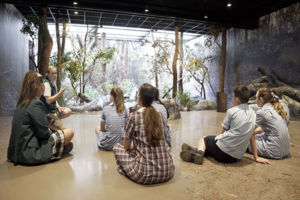
Every day I get to teach in the amazing immersive classrooms. These classrooms are animal exhibits which give students a unique opportunity to interact with wildlife. The animals move freely around the classroom and are conditioned to display natural behaviours. 

Each classroom is themed around an iconic habitat including desert, rainforest and woodland environments. Animals in each classroom include Greater Bilbies, Cotton-top Tamarins, Bush Stone Curlews and Nicobar Pigeons. 

“Seeing the student’s faces light up when they see monkeys running across vines or echidnas waddling around the classroom is a highlight for me”

I get to share my passion for wildlife with schools, not only at the zoo but by travelling …

March 2, 2021|

Koala-ty learning in action

Students from Sydney Catholic Schools (SCS) schools have had the rare opportunity to get up close and personal with one of Australia’s biggest icons … the koala!

Sydney Catholic Schools students learning about wildlife conservation at Taronga Zoo Students learning about wildlife conservation.
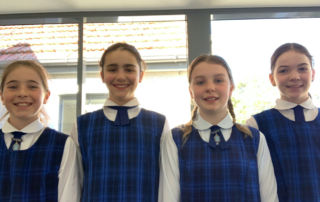
Eight SCS students visited Taronga Zoo where they met Baxter the Koala and some of his native friends.

They also got to speak with zoo keepers about koalas and the innovative conservation projects they are undertaking as part of SCS’ first Project Koala program.

“The koala is such an iconic Australian animal but there are very few natural habitats in NSW, so many students have never seen a koala in person before,” said Taronga Zoo’s education officer, Georgina Cairns, who is currently seconded to the zoo from SCS.

“Having students come to the zoo helps them to create a sense of empathy and a connection with the animals and gives them a better understanding of the importance of wildlife conservation.”

One of Taronga Zoo’s many in-situ education programs, Project Koala aims to get students to engage their local community to take action to help care for our koalas which, researchers estimate, are on track to be extinct as early as 2050 without significant ecological changes.

SCS’ participating schools are:

Throughout 2020 zoo staff, with assistance from SCS teachers, have guided students in Year 3 to 10 to come up with a STEM (science, technology, engineering and maths) based conservation solution to assist with the ongoing survival of …

December 10, 2020|

Tech Girls Movement gains momentum

An app with a bio consciousness designed by Sydney Catholic Schools students has won a national competition designed to bolster girls’ interest in science and technology.

Created by girls at St Mary’s Catholic Primary School North Sydney, the Bio Be Aware app lets users look up if a plant or animal is endangered, rare, or harmful, and provides info on how to help it.

Watch the Bio Be Aware full pitch:

“You can take a photo, add your location and find who to contact for assistance,” the students wrote in their submission to the 2020 Tech Girls Movement competition.

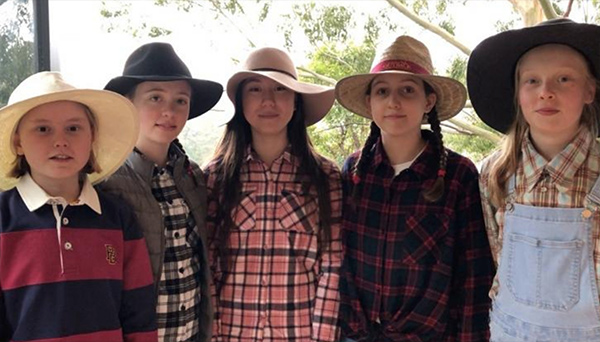
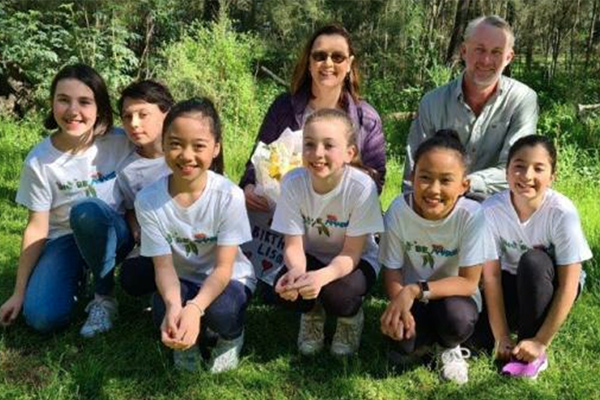
Year 6 students from St Mary's Primary School North Sydney Farmer Connect team (L-R): Charlotte Schroder, Maeve Oczapowska, Lara Mandalidis, Fede Thorsell and Ava Mcpeake.
“An additional feature is the community feed page, where the relevant rescue organisation updates the outcome of your original alert along with the ability to ask questions and have a conversation with people interested in biodiversity and saving our world.

“Bio Be Aware will create awareness and education about biodiversity within our community.”

The Bio Be Aware app was one of six projects entered by the school in this year’s Tech Girls Movement competition – four won awards. Bio Be Aware was named NSW Primary School winner.

School’s awards and projects
  • NSW Primary School Winner – Bio Be Aware
  • NSW Primary School Highly Commended – Farmer Connect
  • United Nations Sustainable Development Goal Award and People’s Choice – Good Health & Wellbeing – Medic 4 Me
  • United Nations Sustainable Development Goal Award – Sustainable Cities & Communities – Plant Oasis
About the Tech Girls Movement

Year 5 Students ...
</p srcset=

November 6, 2020|

Solar challenge goes to school

For the first time ever, Fairfield Patrician Brothers’ College will not only take part in the annual UNSW SunSprint Model Solar Challenge – but will host half the competition.

SunSprint invites primary and secondary students from across NSW and ACT to build solar cars or boats using renewable energy sources and then race them.

“Students’ STEM – short for Science, technology, engineering, and mathematics – knowledge will be integral in implementing parts that are designed to make their car/boat efficient and more effective,” Patrician Brothers’ Year 9 STEM class teacher, Joshua Bryers, said. He said SunSprint gives students the chance to explore renewable materials and develop their engineering skills, “wrapping up the principles of STEM quite well.”

The SunSprint competition usually takes place at the University of New South Wales (UNSW) but, due to COVID-19, Patrician Brothers’ and Holy Cross College Ryde are co-hosting it instead.

Patrician Brothers’ half will be held on Tuesday 27 October. Called MiniSprint, it will include a solar boat competition. UNSW will supply Patrician Brothers with a 20-metre track and a boat pond on the day. Holy Cross will host races on 28 and 29 November.

“We’re still waiting for confirmation but the competition should range from seven to 20 schools taking part,” Mr Bryers said, making reference to MiniSprint. “Students will get a sense of accomplishment and, of course, bragging rights against other schools if they perform well. But, ultimately, this task is all about learning.”

Patrician Brothers is entering teams from all year groups into the competition, with the majority coming from the Year 9 STEM class.

SunSprint

  • Raced on a 100 metre figure-eight track, the SunSprint race cars are built to the Australian-International Model Solar Challenge specifications
  • Cars are usually built by teams of up to four (Years 6 to 12) students and take up to …
November 3, 2020|

Out-of-this-world learning

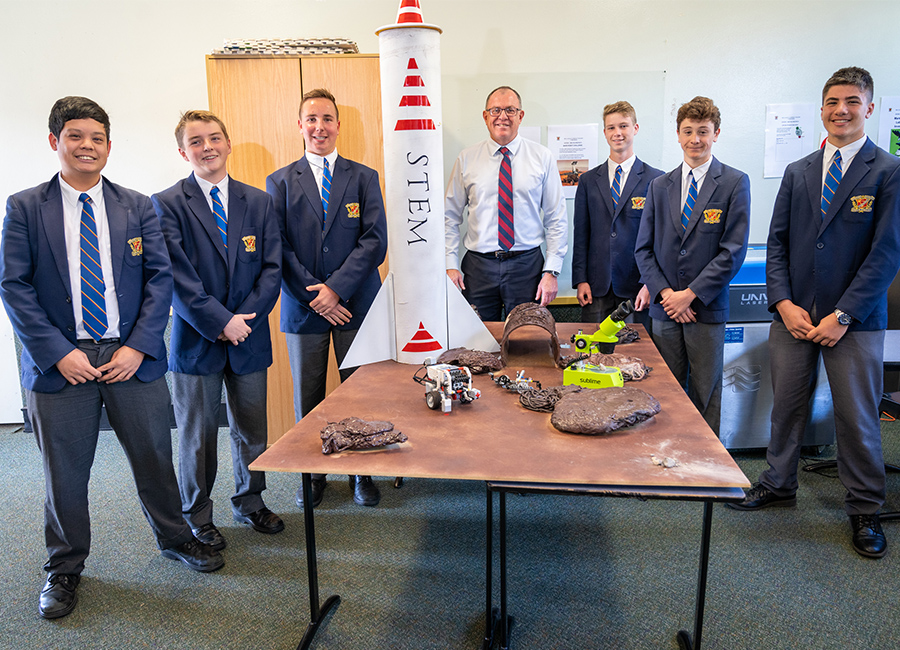
Year 9 students at De La Salle Catholic College Caringbah have built and programmed a robot car – also called an mBOT – that can search for life on Mars.

Their Mars Mission included analysing rock samples under a microscope and reporting their findings to “NASA”. They undertook this project as part of STEM, short for Science, Technology, Engineering and Mathematics.

“Programming the mBOT and understanding the concept of gear ratios took some time, but I understand it well now,” student Matthew Nunn said.

“We saw green plant life and some fragments of metal and, after analysing them closely, we discovered microbial life.”

The Mars Mission is one of many projects helping students to develop skills in problem-solving, creativity, communication and digital literacy.

De La Salle Catholic College Caringbah Year 9 STEM students Gerry Reyes, Brayden Henniker, Nicolas Bambacas, Matthew Nunn, John Ganter and Damien Stassi with STEM teacher Dominic Ritchie. De La Salle Catholic College Caringbah Year 9 STEM students Gerry Reyes, Brayden Henniker, Nicolas Bambacas, Matthew Nunn, John Ganter and Damien Stassi with STEM teacher Dominic Ritchie. Photo: Kitty Beale

What is STEM?

STEM actively involves students in the development and production of quality design projects, and is a pathway to many subjects including physics, mathematics, engineering, design and technology and science.

It gets students experimenting, questioning and evaluating information.

This is the first time De La Salle Caringbah has offered STEM, teacher and assistant principal Dominic Ritchie said.

“We aimed to design a STEM program that grabs a student’s interest and further develops the passion they have for problem solving,” Mr Ritchie said.

“We have seen the students really engaged with the STEM projects and they are enthusiastic about developing their skills.

“Thanks to the positive feedback from students and parents, interest in the class …

September 15, 2020|
Go to Top