(function(w,d,s,l,i){w[l]=w[l]||[];w[l].push({'gtm.start': new Date().getTime(),event:'gtm.js'});var f=d.getElementsByTagName(s)[0], j=d.createElement(s),dl=l!='dataLayer'?'&l='+l:'';j.async=true;j.data-privacy-src= 'https://www.googletagmanager.com/gtm.js?id='+i+dl;f.parentNode.insertBefore(j,f); })(window,document,'script','dataLayer','GTM-MF9T2HG');

End of Era Functions Policy

“This policy is recognition of the fact that Sydney Catholic Schools (SCS) acknowledge Aboriginal and Torres Strait Islander peoples as the custodians of the lands upon which our schools stand. We pay our respects to Elders, past, present and future.

Resilience and how to thrive at school

Building a child’s resilience may be one of the best ways to help them thrive at school and beyond.

School brings so many opportunities for growth and learning. Each day is a source of wonder and new discoveries, personal and academic growth, fun and friendships. But sometimes a challenge may arise.

Enter resilience, the ability to deal with disappointments and to ‘bounce back’ when faced with difficulties.

Here is how to help your child with this vital skill, and how schools support its development.

Why resilience matters

Sydney Catholic Schools (SCS) Manager: Student Wellbeing, Clare McMahon is a Registered Psychologist. 

She said wellbeing at SCS’ 147-strong system of schools is characterised by positive relationships and opportunities to maximise strengths.

Both are factors that have a role to play in building students’ resilience and a positive experience of school.

“At SCS we know that young people who feel safe, connected, secure and have loving and trusting relationships are more likely to be active participants in their learning,” Ms McMahon said.

“They are also more likely to achieve better physical, emotional, social and educational outcomes.”

“Resilience is not about being happy all the time. We need to help our children learn to fail well and learn to accept all emotions because all emotions are a part of life.” – Clare McMahon

A growth mindset

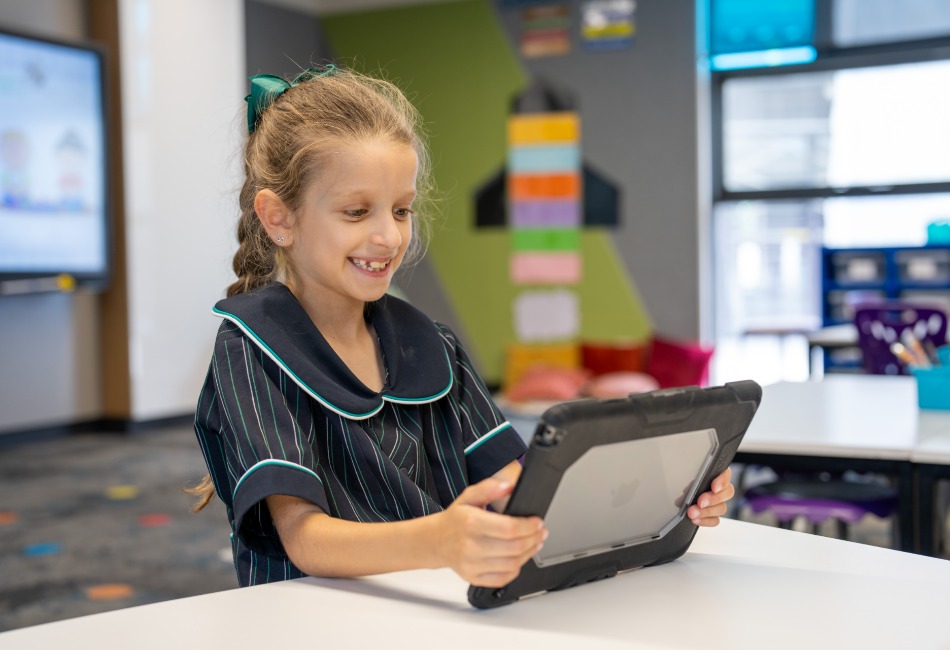
A girl works on a computer in the classroom.A growth mindset is a trait cultivated in classrooms across the system, and can help to build a student’s resilience.

Part of positive psychology, a growth mindset is a belief that abilities can be developed through dedication and hard work.

Those with a fixed …

Our students centre stage at wellbeing conference

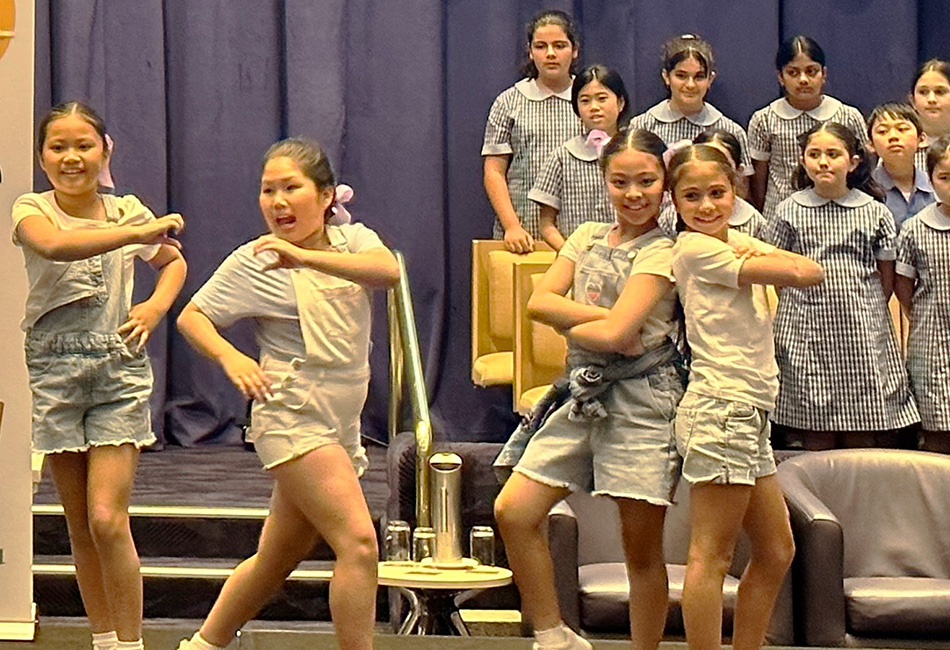
A creative approach to wellbeing has placed 39 choir and dance students and one violinist from St Brendan’s Catholic Primary School Central Bankstown centre stage at the 2023 Positive Schools Wellbeing in Action Conference.

The students sang and performed to Coldplay and The Chainsmoker’s collaboration Something just like this and Hall and Oats’ You make my dreams come true at the Sydney Masonic Centre on 26 October.

The students belong to lunchtime dance and choir clubs formed at the school in February to help build an environment for students to thrive.

Confidence in context

The students were invited to perform at this year’s Positive Schools conference by applied social psychologist Dr Helen Street, whose work on contextual wellbeing forms the basis of St Brendan’s whole-school approach to wellbeing.

Staff completed professional development with Dr Street after St Brendan’s Principal, Patricia Laidler, and Leader of Diverse Learning and Wellbeing, Michelle Coupland, saw her present at the Positive Schools Conference in 2022.

“We are so proud of our shining stars – students and teachers alike.” – Ann-Maree Vyvyan

Dr Street framed an educator’s role as not to tell someone how to be well or to reward them for behaving well, but to provide the right context and environment for students to flourish.

St Brendan's students perform at the 2023 Positive Schools Wellbeing in Action Conference.Assistant principal Ann-Maree Vyvyan said the dance and choir clubs had helped St Brendan’s culturally diverse student population to build friendships, self-esteem, resilience, and a sense of belonging.

“These students now have the confidence to go back into the classrooms and, in small group …

Peer program encourages positive mental health

One Sydney Catholic Schools student’s work takes the 2023 Mental Health Month theme, We all have a role to play, to heart.

When it comes to promoting positive mental health, Archie Kingham is ahead of the curve.

The Marist College Eastwood Year 11 student has developed an initiative called Mental Mates.

Drawing on the expertise of organisations including headspace, the program offers workshops and talks that give high school students the tools to speak about and improve their mental health.

Archie created the initiative in five months through youth leadership program Max Potential. The program asks participants aged 16 to 18 to deliver a community service pitch that takes an entrepreneurial approach to meeting needs in their local community.

“What inspired me to come up with the idea was that people were constantly saying high school is stressful, and that being a teenager is stressful,” Archie said.

“However I never heard my peers commenting on their stress, no matter how obvious it was.”

“The idea of Mental Mates is to create a school environment where students no longer feel that there is a stigma surrounding mental health.” – Archie Kingham

Archie attributes the reluctance to speak about stress, anxiety and other mental health concerns to a stigma that he hopes Mental Mates will help to break.

The program will include small group workshops and guest speakers to share their experience of mental health to give students pathways to speak openly about their concerns and find help when needed for themselves and others.

“No other organisation, as far as I could find, was actually doing this,” Archie said.

During the program’s development Archie surveyed his school community and a majority …

Five benefits to school-aged sport

The health benefits of sport for young people are so often expressed it’s easy to forget just how profound their impact.

Here are five reasons why sport is a first-rate way to encourage healthy bodies, minds, and skills for life.

Healthy bodies

Australia’s physical activity guidelines recommend children aged 5 to 17 do at least 60 minutes of moderate intensity physical activity each day.

These valuable minutes come with many health benefits according to Australia’s national wellbeing framework for learning communities including Sydney Catholic Schools.

Physically, sport provides an outlet for excess energy, encourages better quality sleep and improves motor skills such as balance and coordination.

“You’re more productive if you are physically healthy,” said Sydney Catholic Schools’ Manager: Pre-Post Sport, Damien Kerr.

“To get physically healthy you must participate in regular physical activity and then it is a self-perpetuating cycle.”

Healthy minds

The mental benefits are also impressive. Sport leads to improved blood flow to the brain and higher levels of serotonin and endorphins – neurotransmitters which help regulate and improve our emotional state.

This can boost mood, concentration and alertness – all of which influence learning and academic achievement.

“Regular inter-school sport is a way for students to get … all those benefits that come from playing in a team sport,” – Damien Kerr, Manager: Pre-Post Sport

Confidence

Prepare for your child’s confidence to soar when they clock some of their recommended physical activity through sport.

“You can see success through sport very quickly, whether that is the result at the end of a game, or you note your skills are getting better as …

‘Healthy Kids Pitch’ gives boot camp a leg up

A ‘Healthy Kids Pitch’ has kick-started a renewed wellbeing and fitness focus at St Peter Chanel Catholic Primary School and their passion for health has not gone unnoticed.

Cumberland Council awarded the Regents Park primary school a $5000 grant to buy equipment for its Friday morning boot camp program, which will soon be extended to offer an additional two boot camps a week.

The school’s equipment wish-list includes agility ladders, drill equipment, and an in-ground trampoline to promote active play at recess and lunch too.

Student leaders consulted with every class from Kindy to Year 6 for their input before they submitted their pitch to the council.  

Seeds of wellbeing grow

This is the second time the school has received a Healthy Kids Pitch grant from Cumberland Council. It built a veggie garden with the first grant in 2020.

Produce from the garden is used in the school’s breakfast club, along with cereal donations from parents and eggs laid by the school’s chickens.

“We now have ‘brain breaks’ where the kids go outside after each hour of learning” – Assistant Principal, Amanda Gahan

Co-curricular clubs are flourishing

A child makes use of the play equipment at St Peter Chanel Catholic Primary School Regents Park. The school has received another Healthy Kids Pitch grant to facilitate a morning boot camp.The boot camp and breakfast club are just two of the school’s thriving co-curricular clubs.

“About six to eight months before COVID hit we did a wellbeing survey of the school and put together whole programs to support students,” said Assistant Principal, Amanda Gahan.

“We introduced a breakfast club and teachers reported …

Wellbeing and learning after COVID lockdown

Feeling anxious about the return to school after COVID lockdown? You’re not alone.

Sydney Catholic Schools’ Wellbeing Team have reinforced teachers’ readiness to guide students back to classroom routines, with resources on topics including anxiety, gaming addiction and resources to support wellbeing at school and at home.

THE IMPACT OF LOCKDOWN

By the time face-to-face learning resumes – on Monday, 18 October for Kindies, Years 1 and 12 and Monday, 25 October for everyone else – students will have been out of the classroom for four whole months.

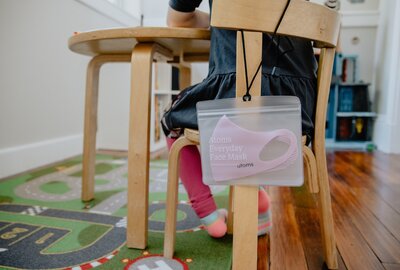
COVID mask hanging of student's chair

Students, parents and teachers have experienced significant changes in routine and lifestyle since lockdown, and estimates of anxiety are double pre-pandemic rates.

“As we return to school it’s important we help staff, parents and students to feel confident and safe,” said Sydney Catholic Schools’ Manager: Student Wellbeing and Learning, Stephen Said.

“It’s acknowledging that this has been a difficult time and we need to support and to look out for each other” – Stephen Said

MENTAL HEALTH SUPPORT IN OUR SCHOOLS

A Headspace survey of more than 3,500 young people during the June 2020 pandemic showed 86 per cent reported a negative impact on mood, wellbeing and sleep.

And according to Mr Said, parents can take heart that many protective factors to enhance positive mental health can be found in their child’s school.

These include social support from friends or adults, positive relationships with teachers, academic engagement, community cohesion and links with cultural identity.

RETURN TO SCHOOL STRATEGIES

Mr Said explained that students were likely very excited to reconnect with their peers and friends at school.

Sydney Catholic Schools’ Manager: Student Wellbeing and Learning, Stephen Said Sydney Catholic Schools’ Manager: Student Wellbeing and Learning, Stephen Said.

To support this return to school, …

October 20, 2021|

How to overcome perfectionism

Is your child excessively self-critical, afraid of doing a task ‘wrong’ or prone to taking a while to bounce back from disappointment? They could be struggling with perfectionism.

Jan Robinson speaks regularly to students and teachers about the difference between ‘healthy’ and ‘unhealthy’ perfectionism, as part of her role within Sydney Catholic Schools’ Research and Innovation team.

She said the myth of the “perfect life” is pervasive, and “perception can be as hampering as reality” if it has as much bearing on your behaviour – or your child’s.

“There is a perceived need to always be reaching for more” – Jan Robinson

“Often we feel some responsibility to be publicly showcasing how healthy, fit, beautiful, clever, or skilled we are. But perfectionism is not always negative,” Mrs Robinson said.

“It’s a multi-faceted trait that varies from the healthy to the unhealthy.

“Understanding where behaviours fall on that spectrum can determine whether it is supporting a child’s learning, or creating barriers to it.”

SIGNS OF HEALTHY VS. UNHEALTHY PERFECTIONISM

A healthy dose of perfectionism can help us learn and achieve, but too much can lead to pressure and procrastination.

‘Healthy’ perfectionism is when students: 

  • Strive for excellence and are satisfied with their personal best
  • See success as a mix of effort and ability
  • Allow for limitations and imperfections
  • Accept failures and keep perspective when they are frustrated by failure

‘Unhealthy’ perfectionism is when students: 

  • Have excessively high standards for themselves and others
  • Focus too much on mistakes
  • Avoid taking risks
  • Show self doubt, poor organisational skills, and procrastinate

Spirituality and wellbeing during COVID-19

Sydney Catholic Schools’ Director of Mission and Identity, Anthony Cleary, discusses the unique wellbeing ‘lift’ that spirituality can bring in times of challenge, such as during the COVID-19 pandemic.

Farming may not be the first thing that comes to your mind when you hear the words ‘spirituality’ or ‘COVID-19’. But it is a good analogy to invoke during this pandemic.

“Every so often farmers don’t plant crops for a year: They let the soil go fallow and allow it to regenerate,” Sydney Catholic Schools’ Director of Mission & Identity, Anthony Cleary, explained.

“It’s a bit like this [lockdown] is a fallow time, a quiet time.

“It’s almost like we’ve got the opportunity now to rest and regenerate, to reflect on the lives that we are living – and to take and to use the quiet time purposefully.”

“A person’s faith and spiritual growth is central to their wellbeing” – Anthony Cleary

The COVID-19 pandemic has given many time to read books forgotten on the shelf at home.This might mean reading books forgotten on the shelf. Or doing random acts of kindness, like calling someone in social or home isolation during COVID.

And if lockdown has given families more opportunities to spend time together, faith has also helped them find and maintain a sense of wellbeing.

AT HOME WITH SPIRITUALITY

Dr Cleary said a person’s faith and spiritual growth is central to their wellbeing.

“Belief really does assist us, especially at times where we have suffering or difficulties in our life,” he said.

“That sense of there being a God, or a spiritual sense that we turn to in prayer that gives us comfort in times of distress, I think is very crucial” – Anthony Cleary

Spoonville craze hits our schools

Concord’s vibrant new ‘spoonville’ village is bringing the community together – one spoon at a time – under the creative power of St Mary’s Catholic Primary School.

Students, teachers and their families kick-started the newest example of the wellbeing project at Queen Elizabeth Park in September. 

It is registered with Spoonville International as village number 469 of the global initiative, which began as an imaginative Englishwoman’s way of cheering up her Berkshire neighbours during the first COVID lockdown in 2020.

“It’s about encouraging happiness in the wider community” – Antonia Geary

WHAT’S THE SCOOP?

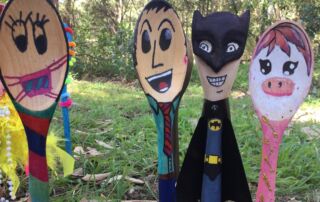
The rules of a spoonville village are simple: choose rain-resistant materials to decorate your spoon, place your spoony character in the village during your exercise trip, feel free to visit the village, add to it and, most importantly, have fun.

Spoony residents of the St Mary’s village in Concord include Batman and a bright array of people and animal-inspired denizens.

A FORM OF CONNECTION

Year 2 teacher Antonia Geary helped bring the St Mary’s village to life, even seeking City of Canada Bay Council’s approval to place it in Queen Elizabeth Park to ensure it was a true community-building exercise.

“We wanted to spread happiness to the local community and encourage all members of the local community to also add their spoons” – Antonia Geary

Mrs Geary said participation was purely optional and there had been a lot of positive feedback. 

“Some of the children have started to send photos of their spoons,” she said. “There’s a bit of hype and excitement around it. They like the fact that it is our Spoonville.”

A COMMUNITY OF SPOONS

St Mary’s Villa aged care residents will also add …

What every child needs right now

In National Child Protection Week, psychologist Sandra Reynolds discusses the changing face of ‘neighbourhood’ during COVID-19 and how to support your child’s wellbeing at this time.

This year’s National Child Protection Week (5-11 September) theme is: Every child, in every community, needs a fair go.

And, according to event organiser the National Association for the Prevention of Child Abuse and Neglect (NAPCAN), to treat all of Australia’s children fairly, we need to make sure that every neighbourhood has what kids need to thrive and be healthy.

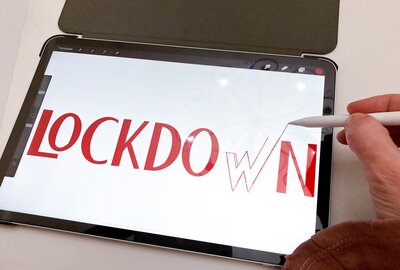
Word 'lockdown' drawn on an iPad

But has the COVID-19 lockdown reshaped how families and children think about neighbourhoods and our feelings of connectedness?

The answer is a clear and resounding yes.

‘AS HUMANS, WE CRAVE SOCIAL INTERACTIONS’

“School is such an important part of a child’s life and it provides access not only to education but so many other areas of social and emotional development,” says Sydney Catholic Schools’ Supervisor: Child Safety, Sandra Reynolds.

“Friendships with peers and positive relationships with teachers influence the experiences of students during the course of their education.

“As humans, we crave social interaction and the need to be connected is hardwired in our DNA.

Sydney Catholic Schools psychologist and education specialist, Sandra Reynolds Sydney Catholic Schools’ psychologist, Sandra Reynolds. Photo: Kitty Beale

“Changing our routine and mode of operation to remote learning requires a level of retraining of our brains to derive the same level of connectedness in a physically non-connected world.”

SO, WHAT MAKES A ‘HEALTHY’ NEIGHBOURHOOD?

“Connectedness is one element of a healthy neighbourhood; other necessary elements include safe places to play and explore in, a balance of nature and accessible services,” explains Ms Reynolds.

“If we consider that for the majority of time during lockdown, we are being asked to make our …

September 9, 2021|

Draw your neighbourhood art project

Child friendly neighbourhoods portrayed through art were the focus of Sydney Catholic Schools’ 2021 National Child Protection Week art competition.

The art competition was organised by Sydney Catholic Schools’ Supervisor: Child Safety, Sandra Reynolds, to coincide with the National Association for the Prevention of Child Abuse and Neglect’s (NAPCAN) annual Child Protection Week (5-11 September).

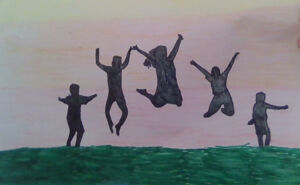
Sophia De Paoli's 2021 Sydney Catholic Schools' National Child Protection art and drawing competition entry Sophia De Paoli’s winning entry.

“Sydney Catholic Schools’ art competition invited schools to talk to their students about their neighbourhoods and then ask them to draw or paint an artwork that reflected their views,” Ms Reynolds said. Participation was wholly voluntary.

Leanne Trinh's Sydney Catholic Schools' 2021 National Child Protection Week art and drawing competition entry Leanne Trinh’s runner-up entry.

“Congratulations to Year 5 student Sophia De Paoli, from Holy Spirit Catholic Primary School Carnes Hill, for her wonderful artwork and being our winner,” Ms Reynolds said.

The runners-up were: Our Lady of Fatima Catholic Primary School Kingsgrove Year 6 School Captain, Leanne Trinh, and Holy Spirit Carnes Hill Year 4 student, Charlotte Gauci.

Charlotte Gauci’s 2021 Sydney Catholic Schools’ National Child Protection Week art and drawing competition entry Charlotte Gauci’s runner-up entry.

Sophia will receives a $100 Dymocks gift voucher and Certificate of Achievement, and Leanne and Charlotte will each receive a $50 Dymocks gift voucher and Certificate of Achievement for their efforts.

Ms Reynolds said a digital copy of all artwork will be sent to NAPCAN and may feature on their website and in their campaign. COVID-19: WHAT EVERY CHILD NEEDS RIGHT NOW

September 7, 2021|

Watch NOW: Online Family Forum

In case you missed it, you can tune in to our Family Forum right here:

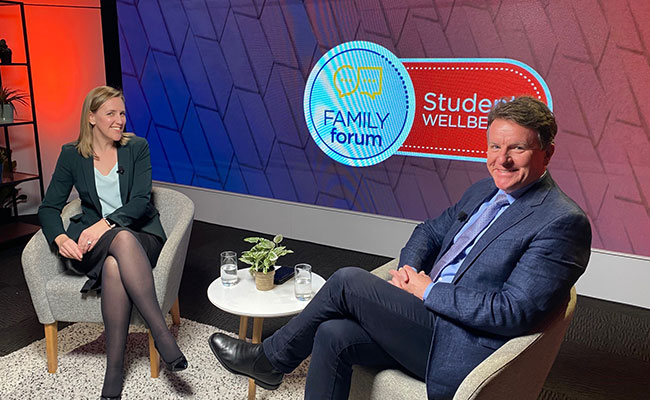
Sydney Catholic Schools Second Family Forum on wellbeing Dr Jacqueline Frost and Mr Tony Farley at Sydney Catholic Schools’ second Family Forum

Sydney Catholic Schools (SCS) hosted its second, live and online Family Forum for parents, carers and staff with more than 1000 people joining to hear about Student Wellbeing.

Hosted by Executive Director, Tony Farley and featuring Dr Jacqueline Frost, Chief of Staff, and Dr Kate O’Brien, Director of Education and Research, the Family Forum centred on the principles and programs being run by SCS to ensure that students feel physically, emotionally, and spiritually secure.

According to SCS Executive Director, Tony Farley: “For us, it’s a simple philosophy.  Once we get well-being right, learning happens.

“As our students move through 13 years of schooling – life necessarily involves challenges and setbacks.  These are unavoidable but learning how to effectively manage these difficult life experiences is resilience and helping to develop resilience in our students is an essential component of the education we offer,” he said.

The Family Forum covered topics including the importance of belonging, the role of wellbeing in the classroom, respectful relationships, managing behaviour and the role of diversity and inclusion in students feeling safe and respected. The session also discussed mental health, anti-bullying, and positive behaviour strategies.

Throughout the interactive forum, the audience was invited to vote for topics they wanted the hosts to expand on further.

Dr Kate O'Brien at Sydney Catholic Schools' second Family Forum Dr Kate O’Brien at Sydney Catholic Schools’ second Family Forum

“The feedback from everyone who participated has been great and we know that parents are eager to learn as much as they can to support the wellbeing of their children.  It’s tough right now …

August 24, 2021|

‘Be a light in lockdown’: Tips for staying connected

From Lego projects to recipe sharing, Sydney Catholic Schools’ Family Educators are leading the charge to help families stay connected to their school, parish and neighbourhood communities this lockdown.

“Now, more than ever, while we are physically separated, we need to feel connected,” says Sydney Catholic Schools’ Education Officer: Church Engagement, Mouna Roche, a sentiment that’s echoed by her colleagues, Elsa Manu and Bernadette Bridle.

Mrs Roche said the Family Educators’ ‘Be a light in lockdown’ initiative encourages Sydney Catholic Schools’ students, along with their families, to complete a series of activities that aim to create a sense of social connection during the COVID-19 pandemic.

The initiative is based on the gospel verse Mathew 15:6: “Let your light shine.”

“This is an opportunity to be a light for others in simple ways” – Elsa Manu

OUR FAMILY EDUCATORS

Family Educators act as liaisons between their appointed Sydney Catholic school and Parish communities, working on and creating invitational events, information sessions and activities that aim to:

  • connect families with the religious life of the school and the parish;
  • provide further support to families in the development of their child – spiritually, socially and educationally;
  • promote Catholic mission and identity;
  • promote a welcoming, vibrant faith community.
FINDING THE LIGHT IN DARK TIMES

Mrs Roche said the pastoral care aspect of the Family Educator’s role was more important now than ever, as people felt the physical, mental and financial effects of isolation.

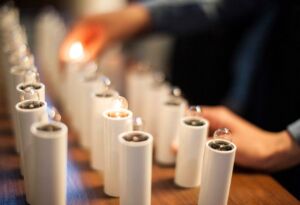
Students lighting a candle at church“We’re so conscious of the fact that so many of our school communities are hurting, either being unwell with COVID-19, or are struggling financially or with the pressure of working and learning from home,” Mrs Roche said.

“Then there are those families who’ve never had to worry about money and now do because both parents have been …

Brain breaks students will love

Need a ‘brain break’ or just some inspo to get moving in lockdown?

Our Lady of the Sacred Heart Catholic Primary School Randwick PDHPE teacher and wellbeing coordinator, Ry Kato, has you covered.

Mr Kato’s 10-minute daily family exercise and daily challenge videos were so popular during the 2020 COVID-19 lockdown that he had to bring them back.

He’s made the videos available to his entire school community via Google classroom.

“My hope is that these videos can provide some sort of benefit to my students and families, physically and mentally,” Mr Kato said.

“Exercise and physical activity are the key to feeling good”

The main aim of the videos is to get the students active, especially after potentially hours without moving while doing their remote learning,” Mr Kato said. 

“The response to the videos and challenges has been great. Many students and parents have let me know that they are enjoying them as a family.”

JOIN THE FUN

Reap the benefits of Mr Kato’s lessons with these simple exercises to get your blood and oxygen flowing:

1. Breathing exercises. Breathe in through your nose, hold for 3 seconds then breathe out through your mouth. Repeat 10 times.

2. Neck circles. Make 10 big, slow circles with your head clockwise, then 10 slow circles anticlockwise

3. Floor to roof. Touch the floor with both hands, then slowly reach as high as you can to the roof. Hold for 5 seconds, then repeat.

4. Swimming strokes. While sitting, do 15 seconds of freestyle, backstroke, breastroke, butterfly – and then repeat.

5. Ankle rolls/calf raises. Keep your toes on the floor while rolling your ankles around them in circles.

6. Squat holds. Stand up, then squat down (like you’re sitting on an imaginary …

Feel Good Fridays keep students upbeat, focused

St Patrick’s College Sutherland student leaders have found the answer to staying focused and up beat at the end of a school week: Feel Good Fridays!

On Feel Good Fridays, students from all grades have joined dance, skipping, mindfulness colouring and band sessions to de-stress and connect. Scavenger hunts and karaoke will be among the activities offered soon.

Wellbeing captain, Bethany Schembri, said the school’s leadership team began the initiative to encourage student wellbeing, motivation and a sense of optimism among their peers.

“One little action of positivity can mean so much to one person” – Bethany Schembri

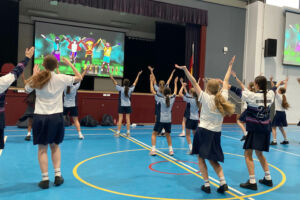
Students dance in their school hall on Feel Good FridayThe initiative recognises how fundamental student wellbeing and a positive school environment are to students’ ability to learn and build strong relationships with others.
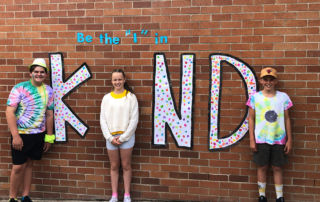
The whole-of-school wellbeing activities have been highly popular with students.

Bethany said the focus on building opportunities to enhance positive mental health was important as the demands of high school increased each year and students were also faced with the influence of social media.

“Overall, the feedback has been extremely positive,” she said. 

“We have found that students love to be more active as a way to get their mind off the pressures of school.

“It helps build relationships between kids of different grades, growing a school community where students are able to feel like they belong.”

Don’t Worry, Be You@Bosco

Students and staff say they are calmer and more settled since a suite of wellbeing and mindfulness activities have been rolled out at St John Bosco Catholic Primary School Engadine.

“The students have embraced these whole-school initiatives with enthusiasm and commitment, resulting in a significant decrease in behavioural incidents in the playground and classroom,” school assistant principal, Mark Abad, said.

Counselling services digital graphic

Some of the visibly impactful initiatives to be introduced at the school include morning mindfulness, lunchtime co-curricular activities and mental, social and physical health days.

Programs such as Be You@Bosco and Random Acts of Kindness have inspired positivity, resilience and inclusivity in both students, teachers and family members, Mr Abad said.

“These programs have improved the students’ ability to verbalise and express how they are feeling in an appropriate manner,” Mr Abad said.

“Their vocabularies have increased to include phrases such as ‘being inclusive’, ‘showing compassion’, ‘being courageous’ and ‘when dealing with relationships’.”

Staff have also been encouraged to participate in morale-boosting activities, such as World Teacher’s Day and R U OK? Day, as well as scones, hot chips and chocolate days at the school.

“These programs have improved the students’ ability to verbalise and express how they are feeling in an appropriate manner” – Mark Abad

They each have wellbeing buddies to check in with as part of the school’s Wellbeing Buddies Program.

“We know holidays can be a difficult time for some, so we are offering parish-run events that focus on community and relationship building, such as trivia nights, walks, outdoor cinemas and activity days,” Mr Abad said.

“We are also continuing tips and information around mental health on our social media platform, as well as promoting …

December 21, 2020|

Shake and shimmy

More than 40 Sydney Catholic Schools (SCS) have jumped on board a new craze designed to get active while having fun.

The brains behind the fun ‘40-Second Challenge’ is Peta Haynes, the sports coordinator at St Christopher’s Catholic Primary School Panania.

She said she and her colleagues, Peter McIntosh and Liz Reakes, designed the challenge during the COVID-19 lockdown to get students moving and interacting – and now 41 SCS schools are taking part!

“Sydney Catholic Schools Sport was looking for a way that they could get kids participating in a challenge,” Ms Haynes said. “The challenge is open to those schools that would like to compete with one another in a fun and safe way during the coronavirus.”

The 40-second challenge is made up of weekly physical activities, and the school keeps score of students’ performance. Videoing yourself completing challenges is entirely optional.

The challenge groups students in year groups – Kindergarten to Year 2, Years 3 to 4 and Years 5 to 6 – with ranging difficulty levels.

Schools’ challenge

Ms Haynes and her colleagues felt it was important other schools got in on the fun as well, which is how the inter-school challenge was born.

“The inter-school challenge allows schools to challenge each other in a safe and friendly COVID-free environment,” she said, adding the activities will go a long way to building school morale and boosting student wellbeing during this tough time.

“This challenge is two-fold, in that it allows students to participate in school within stages and or classes, as well as the teachers challenging each other within their own school,” Ms Haynes said.

“The activities cover a variety of fundamental movement skills and cater to all levels of ability.”

The ‘Shake and Shimmy’ challenge has been the students’ favourite. It involves shaking ping pong balls out of a tissue box by shaking …

A Special Message in Unsettling Times

Where do we find God in COVID-19?

Priests are not immune to the fears and anxieties many are feeling right now.

“At first I said I was ‘frightened’, but then I changed the word to ‘overwhelmed’. I was ‘overwhelmed’ that something like this could happen,” Sydney Catholic Schools’ chaplain Father Gary Perritt (pictured) said in reference to the COVID-19 pandemic.

“I think all of us are overwhelmed,” he observed.

“It (COVID-19) has slowed us down and got us to think about ‘What are the essential things?’ and ‘Who are the essential people?’

“There’s a lot of silence at the moment. Maybe this silence is a new habit that could teach us to listen more to one another” – Father Gary Perritt

“I know for me, I’ve called people I haven’t spoken to for ages to ask ‘Are you okay?’ It’s prompted me to realise how important people are in my life. People I normally see regularly, I miss them. I video-conference, but it’s not the same.”

Asked, where does he find God in all of this? Fr Gary answered simply: “We can find God in one another and in helping one another.”

“Look at Him in our doctors, who fall tired and exhausted … police (who) patrol deserted streets, and they are not with their families because they are taking care of ours,” he said, citing the Archbishop of Lima, Carlos Gustavo Castillo Mattasoglio.

“The coronavirus has helped churchgoers, school teachers and students realise that churches are not being closed. Buildings are being closed. You are the church!” – Father Gary Perritt

“There’s a lot of silence at the moment. Maybe this silence is a new habit that could teach us to listen more to one another,” reflected Fr Gary.

“The way we are treating one another brings out the quiet heroes, heroes we sometimes hadn’t noticed before,” Fr …

Prevention and Management of Student Bullying Policy

Type: Policy
Classification: Operational
Policy Number: SCS2023001
Released: 27 January 2023
Review Date: 27 January 2026
Rescinds/Replaces: TL201604-1.1

Sydney Catholic Schools (SCS) is committed to providing a respectful, safe and supportive learning environment for students. Bullying undermines the dignity and wellbeing of each student, and SCS considers all forms of bullying behaviour unacceptable. In line with its values, SCS fosters communities of care where every student is known, valued and supported through cura personalis, promoting their holistic growth and wellbeing.

Bullying is intentional and repeated behaviour that involves the ongoing misuse of power that can cause physical and/or psychological harm to a student. Bullying behaviour can be verbal, physical, social (e.g. excluding, alienating behaviour) and psychological (spreading rumours, sending hurtful messages or comments) and includes bullying via social media and other online platforms (cyber-bullying).

Bullying can involve discrimination, intimidation and harassment. Bullying behaviours may be individual or collective behaviours which occur on or outside school premises and during or after school hours. Some bullying may constitute criminal conduct such as assault, threatening behaviours, property damage or harassment and stalking.

The purpose of this policy is to support SCS school communities to prevent and address issues of student bullying to build respectful relationships. SCS staff will work in partnership with parents and carers who have an integral role to play in the prevention and resolution of bullying. Through a shared commitment to service and the integral formation of the whole person, this policy supports school communities to nurture safe, inclusive and respectful environments where every student can flourish and reach their full potential.

This policy applies to SCS staff, parents and carers. In this Policy SCS staff means all employees, members of religious orders engaged in schools, volunteers, trainees, interns, and labour hire employees.

Failure to comply with the responsibilities and obligations outlined in the policy may result …

March 29, 2016|

Childhood Infectious Diseases Policy

Type: Policy

Classification: Operational
Policy Number: HR201804-1.0
Version: 1.0
Updated:  June 2018 

Resources

Appendix A: List of infectious diseases for notification.
Appendix B: Sample letter – Exclusion of susceptible Primary school contacts Measles (internal access only).
Appendix C: Sample letter – Immune Primary school contacts Measles (internal access only).
Appendix D: Sample letter – Secondary school contacts (internal access only).

This policy is in place to assist school Principals to meet the NSW Department of Health requirements in regards to infectious diseases in schools.

Infectious diseases can spread rapidly within the classroom and wider school community. Although many pose minimal risk to healthy individuals, some may have adverse and long-term effects on health if undetected or untreated. Some individuals may also have particular susceptibility to, or risks associated with, certain diseases. e.g. children with suppressed immunity and pregnant women.

Schools have a duty of care to provide and maintain a healthy and safe environment for all staff, students and others working at or visiting the school, and to minimise the risk of anyone in the school community contracting an infectious disease.

2.1
Protection of the health and wellbeing of the whole school community is of paramount importance.
2.2
The school will support and protect from unlawful discrimination, harassment or vilification, any students, staff or others who have an infectious disease.
2.3
The school will safeguard the privacy of any staff, student or other person who discloses that they have an infectious disease.
2.4
Members of the school community with an infectious disease have a duty of care to minimise the risk of transmission to other members of the school community and staff.
2.5
The outline in the enrolment policy for priority of enrolment is applied regardless …
March 27, 2016|

Student Management: Suspension, Transfer and Exclusion Policy

Type: Policy
Classification: Operational
Policy Number: SCS2026027
Released: 20 August 2026
Review Date: 1 December 2026
Rescinds/Replaces: SCS2023011

At Sydney Catholic Schools, our student behaviour expectations are grounded in our identity as Christ‑centred communities, entrusted with the dual mission of educating and evangelising young people. Inspired by the Magis Strategy, the call to “do more” and “be more” for Christ and others, we teach our students that each person is a valued member of one unified community. Every action, choice, and behaviour contributes to the flourishing of the whole.

The purpose of this policy is to provide guidance to SCS schools in managing student behaviour of concern. It should be read in conjunction with the Student Management: Suspension, Transfer and Exclusion Procedures (the Procedures).

This policy applies to all SCS staff responsible for student management.

For the purpose of this policy:

  • Suspension – Temporarily removing a student from all their normal classes, school activities and/or the school site.
  • Transfer – Permanently removing a student from their current SCS school while offering the opportunity for a placement at another SCS school identified by the Principal and/or SCS as appropriate.
  • Exclusion/Expulsion – The student’s permanent removal from their current SCS school, with no eligibility to re‑enrol in any SCS school.

The following principles guide how this policy will operate in practice:

3.1 The safety and wellbeing of SCS students, parents/carers and staff is paramount.

3.2 SCS schools are safe and caring environments in which staff are expected to build and maintain positive relationships with students and parents/carers to effectively manage student behaviour through collaboration and open dialogue.

3.3 Students are required to comply with the rules and expectations about their conduct set by their school.

3.4 Students are treated equitably and in a procedurally fair and just manner. Students are given the opportunity to reflect on and acknowledge the impact …

March 19, 2016|

Student Wellbeing Policy

Type: Policy
Classification: Operational
Policy Number: SCS2021006
Released: 23 August 2021
Review Date: 23 August 2024
Rescinds/Replaces: TL201803-1.0

The wellbeing of all students is at the heart of Catholic Education in Sydney Catholic Schools (SCS), enabling a learning environment which promotes and provides for the spiritual, physical, cognitive, social and emotional growth of our students. Guided by the SCS Mission, Vision and Values, and our commitment to service, we accompany each student through cura personalis, fostering a culture of belonging, participation and respectful relationships.

Student wellbeing is a student’s level of satisfaction about the quality of their life at school. Optimal (or desirable) wellbeing is characterised by positive feelings and attitudes, positive relationships with other students and teachers, resilience and satisfaction with self and learning experiences at school (Noble, McGrath, Roffey and Rowling 2008).

A whole school approach to strengthening child safe communities acknowledges the strong interconnections between student safety, wellbeing and learning. There is a continual focus on inclusion, promoting positive relationships and safe behaviours. Student safety and wellbeing are enhanced when students feel connected to their school, have respectful trusting relationships with their peers and teachers, feel confident about their social and emotional skills and are comfortable with their learning experiences at school.

This policy is underpinned by the Australian Student Wellbeing Framework which is based on evidence that demonstrates the strong association between safety, wellbeing and learning. The framework recognises five elements that are key to supporting the whole school community to build and maintain safe, positive relationships and wellbeing: leadership, inclusion, student voice, partnerships and support. This is complemented by the Be You Framework, a national initiative for educators, aimed at promoting and protecting positive mental health in children and young people. The integration of both frameworks supports SCS school communities to provide every student with the strongest foundation possible …

March 18, 2016|

Supporting Students with Complex Care Needs Policy (Medical Assistance)

Type: Policy
Classification: Operational
Policy Number: SCS2026028
Released: 15 September 2026
Review Date: 15 September 2029
Rescinds/Replaces: SCS2022011

Aligned with the Magis Strategy and its commitment to excellence, SCS affirms that the health, safety, dignity and wellbeing of every student are foundational to learning. SCS supports the independence, dignity and privacy of students with complex medical needs, ensuring that all care reflects our values of compassion, respect and integrity.

The Supporting Students with Complex Care Needs Policy (Medical Assistance) outlines how schools are to manage and support students requiring complex health care. It clarifies required supports and defines responsibilities. Consistent with the Magis Strategy, schools must have effective processes to meet each student’s individual care needs while encouraging the student’s independence wherever possible.

This policy is in alignment with Standard 4 of the NSW Child Safe Standards and the National Catholic Safeguarding Standards, where equity is upheld and diverse needs are taken into account.

This policy applies to SCS staff, and parents and carers of students who require specialised medical assistance. In this policy, staff refers to all employees of SCS, members of religious orders engaged in schools, volunteers, trainees, interns and labour hire employees. 

3.1    SCS is committed to the health, safety, dignity and wellbeing of all students and decision making at all levels prioritises the safety and wellbeing of children               and adults at risk.

3.2    SCS recognises that some students with complex health care support needs may require specialised medical assistance at school.

3.3    SCS supports the independence, dignity and privacy of students requiring medical assistance at school.

3.4    Parents and carers work collaboratively and constructively with SCS in supporting the student’s health, safety and wellbeing needs.

Note: For administration of medications to students whilst attending school or school-based activities, in accordance with the advice of the student’s prescribing health practitioner, or as an …

March 17, 2016|
Go to Top