(function(w,d,s,l,i){w[l]=w[l]||[];w[l].push({'gtm.start': new Date().getTime(),event:'gtm.js'});var f=d.getElementsByTagName(s)[0], j=d.createElement(s),dl=l!='dataLayer'?'&l='+l:'';j.async=true;j.data-privacy-src= 'https://www.googletagmanager.com/gtm.js?id='+i+dl;f.parentNode.insertBefore(j,f); })(window,document,'script','dataLayer','GTM-MF9T2HG');

Beyond Marks: What really matters in your child’s education

When school results are released, the focus quickly turns to statistics. HSC results, NAPLAN scores, rankings and ATARs often dominate the conversation.

Achievement matters. Data is important. Schools want students to do well, and parents rightly celebrate their children’s hard work.

But most parents are also asking a deeper question: Who is my child becoming?

Education shapes more than school results. It shapes a young person’s confidence, character and values. It influences how they see themselves and how they treat others.

And it’s these qualities that will stay with them long after exams are finished.

School is about growth, not just knowledge

Children today have access to more information than any generation before them. Knowledge is everywhere — on phones, computers and in classrooms.

Because of this, the real question is not only what students know, but what they do with what they know.

Can they think carefully about problems?
Can they make good decisions?
Can they show empathy and honesty?
Can they stay true to their values when life becomes difficult?

These abilities do not develop overnight. They grow in places where students feel supported, known and encouraged to reflect on their choices.

Schools help shape not only how young people learn, but how they grow.

Why values matter in learning

A strong focus on values does not take away from academic success. In many cases, it strengthens it.

When students understand that their learning has meaning and purpose, their motivation often grows. They are not simply studying for the next test. They are preparing for life.

This idea sits at the heart of Catholic education.
Four fun STEM activities to build science skills at home

When it comes to science experiments, the classic baking soda volcano is a rite of passage.

To keep the learning excitement going beyond the volcano, Sydney Catholic Schools is sharing four fresh, fun, and hands-on ideas to get your child’s interest in STEM (Science, Technology, Engineering, and Mathematics) truly exploding with curiosity.

Whether your child is a budding scientist, tech whiz, builder, or mathematician, these simple activities will spark young minds and make STEM feel lively and accessible – no smoke or lava required.

Science: Kitchen chemistry that bubbles with surprise

Cooking is a fantastic gateway to fascinating science, packed with real-life chemical reactions that kids can see, touch, and even taste! 

Instead of the usual baking soda volcano, try making homemade butter by shaking cream in a jar. It’s delightfully messy, hands-on, and a delicious way to watch science come alive right before your eyes. Even better, it’s an experiment you can eat afterwards!

Pro tip: Talk about how movement causes liquids to change form and let your child explore the process hands-on.

Technology: Level up their coding skills

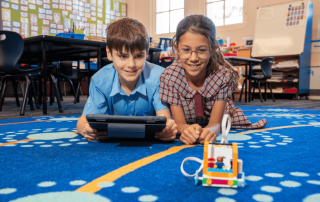
Transform screen time into a powerful creative challenge by immersing your children in coding projects that develop valuable, real-world skills. Platforms like Scratch and Python give teens the opportunity to bring their ideas to life by designing games, animations, apps, or even websites. 

These tools blend logical thinking with creativity, encouraging hands-on problem-solving, experimentation, and iterative learning (process with repetitive actions), skills that are highly sought after in today’s digital world. Coding not only sharpens technical abilities but also unlocks new ways to express and innovate.

Pro tip: Take coding offline by writing “programs” for friends to follow, like creating a treasure hunt with step-by-step instructions. Debugging mistakes and improving your code is where …

From scrolling to stories: Four ways to help teens fall in love with reading again

In today’s world of endless social media feeds, streaming services, and constant notifications, it’s easy for teenagers to forget the simple joy of getting lost in a good book. Nurturing a love of reading doesn’t have to be a chore, it can be a delightful journey back to wonder, imagination, and even faith.

If you’re a parent or guardian looking to gently reignite that spark, here are four practical ways to help your child rediscover the magic of reading.

Along for this literary ride are our resident Sydney Catholic Schools experts, Curriculum and Innovation Specialists Jacqueline Simpson and Adam Moore, who offer practical, research-informed insights into how teens engage with stories today.

Start with what they already love

Books don’t have to be classics or New York Times bestsellers to spark interest. If your teen is into Marvel, Minecraft, or The Mandalorian, there’s likely a novel, comic, or companion book to match.

“Reading for pleasure often dips in the teenage years, but that doesn’t necessarily mean teens aren’t reading, perhaps just differently,” explains Adam.

By tapping into pop culture, parents can help turn “I don’t like reading” into “Wait, there’s a book about that?”

📚 Recommended reads:

  • Star Wars: Ahsoka by E.K. Johnston – Fills in the story between the Clone Wars and Rebels with strong themes of courage, identity, and justice.
  • Minecraft: The Island by Max Brooks – A survival adventure written in a fun, accessible style that mirrors the game’s challenges.
  • Halo: The Fall of Reach by Eric Nylund – A deeper …

Unlock the spark that makes your child shine

Every child has unique talents waiting to be nurtured. Some have a way with words or a knack for problem-solving.

Others have a natural ability to connect with people, excel on the sports field or shine on stage. No matter their gift, their potential is limitless.

So, how can we help our kids explore their strengths and develop their passions?

Photo showing a student with a netball

Encourage Exploration

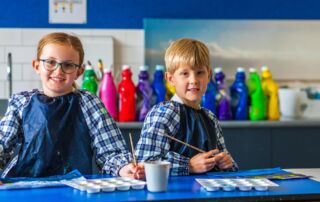
Children are inherently curious, so give them space to explore, tinker, and create! From messy art to backyard science, building a cardboard rocket, or trying out soccer and basketball, hands-on play helps them uncover skills in unexpected ways.

Providing opportunities for both physical and intellectual discovery allows them to tap into their natural abilities with confidence and joy.

Recognise Talents Beyond the Classroom

Not all talents fit neatly on a report card. Some children are born storytellers, others are problem-solvers, some have a quirky or mature sense of humour, and some bring joy and positivity to everyone around them. These gifts are just as valuable as academic achievements.

By recognising and celebrating these unique abilities through positive reinforcement, personalised praise, and giving them a platform to showcase their abilities, you empower your child to see their potential beyond traditional success markers.

Follow Their Spark

What lights up your child’s eyes? Music, coding, cooking, athletics, or caring for others? Pay attention to their interests and nurture them with encouragement – and maybe a few supplies to fuel their latest creative pursuit!

Whether it’s the thrill of a sporting match or the joy of creating music, helping children develop their passions builds confidence and sparks lifelong curiosity. By introducing your children to a wide range of experiences, you naturally create opportunities for learning.

Celebrate Progress, Not Perfection

Every stumble is an opportunity to grow. Encourage effort, …

Spark creativity in your child!

Five ways to spark creativity and self-expression in your child!

Are you amazed by your child’s creativity? Do you love seeing their imagination run wild during story-time, making drawings or inventing games? If you’ve wondered how to nurture their creativity while balancing screen time, you’re not alone. 

The good news is, nurturing creativity goes beyond developing a young artist; it builds problem-solving, emotional intelligence, confidence, and a strong sense of self. Eva Spata, Supervisor for Performing and Visual Arts Curriculum at Sydney Catholic Schools, shares five simple ways to inspire creativity and self-expression, helping your child grow confident and ready for life’s challenges.

1. A (small) space of their own

Create a special space where your child can freely express themselves. It doesn’t need to be elaborate—just a small corner with art supplies, musical instruments, or costumes. Let them personalise it with their artwork or favourite colours, making it a dedicated spot for creativity.

Eva says: “A creative nook of their own gives children physical and mental space to explore their interests freely. A space to express themselves, no matter how small, can become a welcome retreat where children can develop their ideas without disruption or having to pack up their things mid-project to make way for dinner!”

2. Make time for… nothing!

Give the gift of free time. While structured activities are important, unstructured playtime is where creativity thrives. Give your child the freedom to play without goals or instructions. This kind of free play can even be something you do together with your child. Let them invent games, create stories, or experiment with materials like clay, paints, musical instruments or building blocks.

Eva says: “They may start by saying they’re ‘bored,’ but soon they’ll be creating their own fun! Unstructured play sparks imagination, lets …

September 10, 2024|

How to unlock the magic of reading

Five great ways for every family to create a lifelong love of reading!

As a parent, you might wonder how to foster a love of reading in your children. For Aidan, the answer came naturally on the occasional afternoon when he picked a book from the overflowing shelf and settled on the couch for a bit of post-school calm time with his kids, Ollie and Mia. His animated reading and funny voices transformed their living room into a vibrant world of adventure, filling their home with laughter and wonder. 

It began with library picture books on weekends and continued with the kids reading from their own school readers on school afternoons. It has grown into a cherished family habit that strengthens their bond and supports a lifelong passion for reading. 

Most importantly, Ollie and Mia are learning that reading is fun and that they, too, can become confident readers. 

If you’d like to discover ways to create a fun family reading experience of your own, read on!

Five ways to turn a love of reading into your child’s literacy superpower

1. Become that pirate, bunny, or wicked witch
Unleash your inner actor! Bring stories to life by reading aloud with expression. Read in a mouse voice or become that bearded pirate! Let your child see and feel your enjoyment. Ask thought-provoking questions like, “What do you think this book is about?” or “Why do you think the character did that?” This sparks their imagination whilst building their listening and comprehension skills.

2. Make it a special moment of daily togetherness
Create a special reading time, whether it’s a cosy bedtime story, an afternoon reading session, or a morning ritual over breakfast. It’s a special time spent together that kids look forward to, allowing …

Boost young minds with Science and Technology

Ever wondered how your child’s endless curiosity and boundless energy can be the foundation for a future in science and technology? Imagine transforming their natural wonder into a love for Science and Technology right from your living room. Intrigued? Keep reading to discover the secrets for making your home a launchpad for future scientists, engineers, and tech entrepreneurs!

Why Science and Technology is the future (and why it matters to you!)

Science and Technology jobs are growing like wildfire – expected to soar by over 12% in the next five years! That’s twice as fast as other careers. But what does that mean for you and your kids? It means a world full of opportunities for scientific thinkers. Observing, questioning, testing, and communicating – if this sounds like your child, you’re already halfway there!

Transforming everyday moments into adventures in Science and Technology

  1. Cooking up science in the kitchen

Turn your kitchen into a science lab! Measuring ingredients is a sneaky way to practise maths. Breaking down a recipe? That’s computational thinking in action! Try this: mix baking soda and vinegar for a fizzy volcano or colour celery water to see capillaries in action. Cooking just became a whole lot more exciting!

  1. Experimentation nation

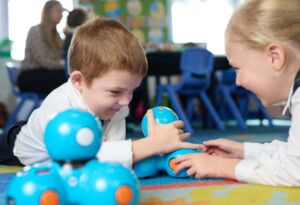
Got vinegar and an egg? Cover the egg in the vinegar for 48 hours and watch the shell dissolve and reveal a bouncy egg! Or mix corn flour and water into a paste to make Oobleck, a great example of a non-Newtonian fluid that is a lot of fun to play with. These fun experiments teach chemical reactions and biological processes effortlessly. Who knew learning could be this fun?Young students practise digital skills with robots in the classroom.

  1. Nature’s lab – …

Game on: Benefits of sport for kids

With the Paris Olympic Games less than a month away, the determination, camaraderie and sheer physical skill present in elite sport will be on full display.

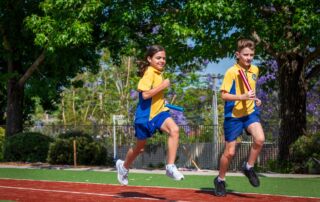
And while seeing athletes at their peak is a vivid reminder of the many benefits of sport, your child doesn’t have to be a budding Olympian or Paralympian to embrace the positive effects of taking to your nearest pool, track, court or field.

Here are three reasons why making sport a part of daily life from an early age is a winning idea. 

The physical benefits

Sport provides an outlet for excess energy, improved sleep quality and motor skills such as balance and coordination.

It also aids the healthy growth of bones, muscles, ligaments and tendons.

“The physical benefits are quite obvious,” said Sydney Catholic Schools Manager of Sport Declan Donohue.

“The more that students are exercising the less chance they have of getting illnesses or  long-term injuries.”

“Sport is an excellent avenue to expand their social network.” – Declan Donohue

The social benefits

Mr Donohue said the social benefits of sport are sometimes undervalued, and an important part of the sporting experience.

Whether it’s the inclusiveness and cooperation that comes with a team sport, or just another common interest among new friends, sport brings many social advantages.

“At school students can have a small group of friends that they spend a lot of time with,” Mr Donohue said.

“Sport is an excellent avenue for them to expand their social network. 

“School and holiday sport programs in particular give students of all ages an opportunity to meet with others who they may not normally interact with.”

The mental and emotional benefits

The inherent life-lessons in sport can leave young …

Resilience and how to thrive at school

Building a child’s resilience may be one of the best ways to help them thrive at school and beyond.

School brings so many opportunities for growth and learning. Each day is a source of wonder and new discoveries, personal and academic growth, fun and friendships. But sometimes a challenge may arise.

Enter resilience, the ability to deal with disappointments and to ‘bounce back’ when faced with difficulties.

Here is how to help your child with this vital skill, and how schools support its development.

Why resilience matters

Sydney Catholic Schools (SCS) Manager: Student Wellbeing, Clare McMahon is a Registered Psychologist. 

She said wellbeing at SCS’ 147-strong system of schools is characterised by positive relationships and opportunities to maximise strengths.

Both are factors that have a role to play in building students’ resilience and a positive experience of school.

“At SCS we know that young people who feel safe, connected, secure and have loving and trusting relationships are more likely to be active participants in their learning,” Ms McMahon said.

“They are also more likely to achieve better physical, emotional, social and educational outcomes.”

“Resilience is not about being happy all the time. We need to help our children learn to fail well and learn to accept all emotions because all emotions are a part of life.” – Clare McMahon

A growth mindset

A girl works on a computer in the classroom.A growth mindset is a trait cultivated in classrooms across the system, and can help to build a student’s resilience.

Part of positive psychology, a growth mindset is a belief that abilities can be developed through dedication and hard work.

Those with a fixed …

A peek inside the Kindergarten classroom

With a term of primary school to their name, Kindergarten children are becoming truly settled in their new school routine.

They’ve started to gain confidence as learners and to develop new relationships and friendships.

For a peek at what they’ve been up to inside their new classroom and what lies ahead, read on. 

Inside the classroom

First, know that the Kindergarten classroom is a vibrant and exciting place to be.

“The classroom environment is carefully designed to make each child feel welcome, safe and engaged,” said Sydney Catholic Schools’ Specialist: Early Years (pre-K to 4) Curriculum  Kim Moroney. 

“There is movement, activity, exploration, discovery, conversation, laughter, singing, playing, reading, writing, counting, measuring, calculating, wondering, questioning,  concentration, listening, explanations…the list goes on. 

“Mostly, there is magic!”

Teachers … help children understand that mistakes are OK and help us make new discoveries.” Kim Moroney, Specialist: Early Years Curriculum

Ms Moroney said teachers welcome each child ‘where they are at’ as they start their school experience, gaining an understanding of each child’s needs, talents and unique personality.

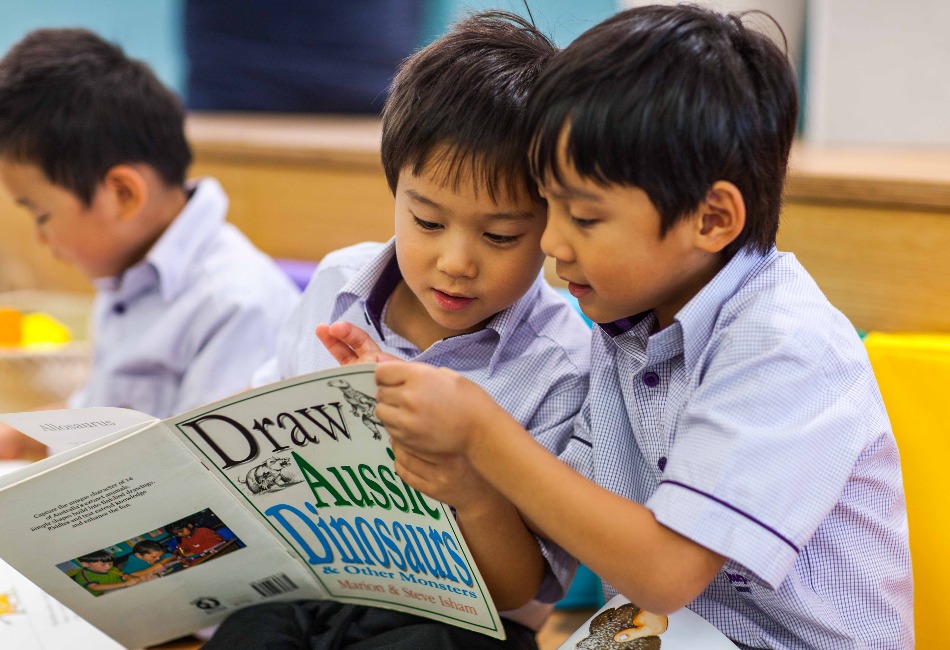
Kindergarten students read a book together.They may teach independence by gradually increasing student autonomy and setting clear expectations.

Children are supported to communicate effectively, self-regulate, and resolve differences or conflicts. Conversations about self-respect, respect for others, kindness and empathy are woven into the fabric of everyday life.

Teachers encourage effort and help children understand that mistakes are OK and help us make new discoveries,” Ms Moroney said.

“They also offer feedback to help children improve and to develop and set achievable goals for success.”

Supporting change

A new level of tiredness or fatigue is common when …

How to make Mathematics fun for kids

Mathematics skills are vital to help children make sense of the world.

So how do you ensure they learn and enjoy them?

Here we look at how schools set strong numeracy foundations from Kindergarten, and the activities you can do at home to help your child’s skill, confidence, and appreciation for Maths grow.

Strong foundations

At Sydney Catholic Schools, students in Kindergarten to Year 2 are explicitly taught Mathematics through active learning experiences that link to real-world scenarios.

Numeracy and Mathematics Specialist at Sydney Catholic Schools, Greg Georgiou, said this allows students to practise and apply their knowledge to different situations.

“The role and intent of a Kindergarten Mathematics lesson is for students to develop essential numeracy skills and fluency, while nurturing the ability to think logically, critically and creatively,” he said.

Education Officer: Curriculum (K-6 Mathematics) Maree Cooper agrees. She said Kindergarten children require a lot of practice and active exploration with everyday objects to confidently develop numeracy and Mathematics skills.

“Teachers provide ample time, materials, and high-quality targeted support for children to enhance core skills like matching, sorting, comparing and ordering,” Mrs Cooper said.

“A Kindergarten Mathematics lesson [develops] essential numeracy skills and fluency, while nurturing the ability to think logically, critically and creatively.” – Greg Georgiou, numeracy and Mathematics specialist

The language of Mathematics

Developing a vocabulary specific to Maths at home also helps students thrive in the subject.

Words like high, low, short, long, light, heavy, near, far, first, and last make the list to describe distance, order, and other key concepts.

Your child might also compare quantities using phrases like ‘more than’, ‘less than’ or ‘the same as’. 

“It might take time for your child to use …

How a well-rounded education helps kids flourish

No matter if your child is academically gifted or a talented athlete, there are things all parents should look for when choosing a school.

The conversations are happening in backyard barbecues, in local parks, and late at night between tired parents who want to do the right thing for their children.

What kind of school will give kids the best opportunity to thrive?

Students in a Science lab at a Sydney Catholic schoolThe question has been well researched globally and the answer is resounding: a well rounded education, with a variety of opportunities in different fields will foster the kinds of skills children will need to succeed.

For example, while there has been a huge focus on STEM education to improve our maths, science and technology skills – recent research found that including arts subjects helps future scientists and mathematicians think more creatively.*

Additionally, the World Economic Forum reported in 2020 that fostering a rich education environment, including everything from creativity to technology and teaching children collaborative problem solving skills, will provide the strengths children will need in our future economy.

“The early years of a child’s education are sharply focussed on providing them with strong foundations in literacy and numeracy which are the building blocks.” – Tony Farley, Executive Director of Sydney Catholic Schools

Improving outcomes

This broad-based educational offering not only gives children the chance to thrive in subjects they may never have tried; it has been shown to improve outcomes in core areas such as literacy and numeracy.

And, according to executive director of Sydney Catholic Schools Tony Farley, this gets to the heart of why children should have access to a well-rounded education from an early age.

“The early years of a child’s education are sharply focussed on providing …

Go to Top