(function(w,d,s,l,i){w[l]=w[l]||[];w[l].push({'gtm.start': new Date().getTime(),event:'gtm.js'});var f=d.getElementsByTagName(s)[0], j=d.createElement(s),dl=l!='dataLayer'?'&l='+l:'';j.async=true;j.data-privacy-src= 'https://www.googletagmanager.com/gtm.js?id='+i+dl;f.parentNode.insertBefore(j,f); })(window,document,'script','dataLayer','GTM-MF9T2HG');

5 STEAM Activities Every Family Should Try

Everyone seems to be talking about STEAM education, and for good reason. 

Many parents will already be familiar with STEM, which brings together Science, Technology, Engineering and Mathematics. STEAM places the Arts more centrally within this learning experience. Both approaches foster creativity, communication, design thinking and problem-solving, and are most powerful when these disciplines are connected rather than explored in isolation. 

At Sydney Catholic Schools (SCS), this learning comes to life through opportunities such as SCS STEM MAD, part of the national STEM MAD (Make A Difference) competition. Each September, students across our system develop and share innovative projects that apply their knowledge and creativity to real-world challenges. 

More than a competition, STEM MAD encourages students to view the world with empathy and identify ways to support others, care for our environment and make a positive difference. Reflecting Pope Francis’ Laudato Si’ and its call to care for our common home, students discover that their creativity, innovation and STEM skills can be used to develop meaningful solutions and positively impact the world around them.  

As Christine McDonald, Education Officer: K-6 (STEM) Curriculum & Innovation at SCS explains, “Importantly, STEM and STEAM don’t have to be confined to the classroom. Families can create authentic learning experiences at home that often look and feel like play, while developing a deeper understanding and appreciation of the world around them.” 

 Here are a few tips to get you started… 

Science: Become a Backyard Investigator 

Nature is the perfect outdoor laboratory. 

Younger children can create a nature journal, observing insects, birds or plants in the backyard or local park. Older students can …
Four fun STEM activities to build science skills at home

When it comes to science experiments, the classic baking soda volcano is a rite of passage.

To keep the learning excitement going beyond the volcano, Sydney Catholic Schools is sharing four fresh, fun, and hands-on ideas to get your child’s interest in STEM (Science, Technology, Engineering, and Mathematics) truly exploding with curiosity.

Whether your child is a budding scientist, tech whiz, builder, or mathematician, these simple activities will spark young minds and make STEM feel lively and accessible – no smoke or lava required.

Science: Kitchen chemistry that bubbles with surprise

Cooking is a fantastic gateway to fascinating science, packed with real-life chemical reactions that kids can see, touch, and even taste! 

Instead of the usual baking soda volcano, try making homemade butter by shaking cream in a jar. It’s delightfully messy, hands-on, and a delicious way to watch science come alive right before your eyes. Even better, it’s an experiment you can eat afterwards!

Pro tip: Talk about how movement causes liquids to change form and let your child explore the process hands-on.

Technology: Level up their coding skills

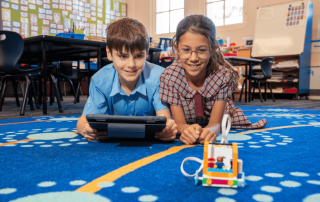
Transform screen time into a powerful creative challenge by immersing your children in coding projects that develop valuable, real-world skills. Platforms like Scratch and Python give teens the opportunity to bring their ideas to life by designing games, animations, apps, or even websites. 

These tools blend logical thinking with creativity, encouraging hands-on problem-solving, experimentation, and iterative learning (process with repetitive actions), skills that are highly sought after in today’s digital world. Coding not only sharpens technical abilities but also unlocks new ways to express and innovate.

Pro tip: Take coding offline by writing “programs” for friends to follow, like creating a treasure hunt with step-by-step instructions. Debugging mistakes and improving your code is where …

Rose Bay students help end energy poverty

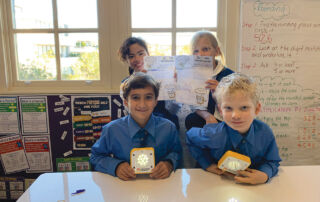
McAuley Catholic Primary School Rose Bay Years 3 to 6 students have joined forces with Origin Foundation to build solar-powered lights for children in Papua New Guinea (PNG) and Vanuatu who live in energy poverty. 

In its second year, the Lights to Learning program has been a huge hit with Rose Bay students and staff.

“We are proud to be involved in a program which not only helps to teach students about science and engineering, but is also designed to help those in need,” teacher Karen Blacklock said. 

“For our students to be able to see the impact their solar-powered light has on education, health, the environment and the economy is extremely rewarding” – Karen Blacklock

Students spent an afternoon building the aptly named SolarBuddy lights, along with writing a letter to the lights’ new owners overseas. McAuley Rose Bay Students

The solar-powered lights are waterproof, easy to operate, carry and charge. 

Without them, school students in PNG and Vanuatu are forced to rely on dangerous and unsustainable sources of fuel  like kerosene, diesel, wood or candles to study after dark.

“It’s really nice to help someone,” Year 3 student, Zoe, said. 

Thanks to solar lighting, there has been a 78 percent increase in the amount of time PNG communities can now study. 

“I think it’s fair we all have electricity in our lives, because when you get home it’s already dark and you can’t do your homework” – Zoe 

“These SolarBuddy lights will help children living in energy poverty to continue studying long after the sun goes down, improving their education outcomes and overall health and wellbeing,” McAuley Rose Bay Principal, Nicole Jones, …

June 3, 2021|
Go to Top