(function(w,d,s,l,i){w[l]=w[l]||[];w[l].push({'gtm.start': new Date().getTime(),event:'gtm.js'});var f=d.getElementsByTagName(s)[0], j=d.createElement(s),dl=l!='dataLayer'?'&l='+l:'';j.async=true;j.data-privacy-src= 'https://www.googletagmanager.com/gtm.js?id='+i+dl;f.parentNode.insertBefore(j,f); })(window,document,'script','dataLayer','GTM-MF9T2HG');

Sydney Catholic Schools teacher honoured for Gifted Education excellence

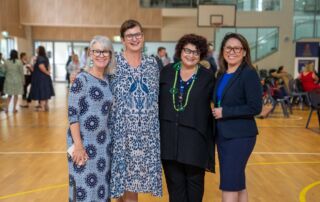
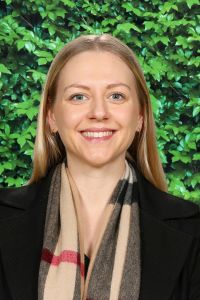
A passion for helping gifted students reach their full potential has led St Anthony’s Catholic Primary School Marsfield teacher Lauren Marnezos to one of the University of New South Wales (UNSW)’s highest academic honours.

Lauren has been named on the 2025 Dean’s List for her outstanding results in the Graduate Certificate in High Potential and Gifted Education.

Lauren’s interest in high potential and gifted education was ignited early in her teaching career, where she realised that gifted students require deliberate, thoughtful differentiation to truly thrive, and that their learning needs are not always immediately visible.
“While teachers are often very aware of students who may need additional support, high potential learners can be overlooked or assumed to be ‘doing fine’ on their own,” Lauren explains.

“I wanted to deepen my understanding of how to identify and nurture these students’ abilities, while also supporting their emotional and social development.”

Being named on the Dean’s List at UNSW is a recognition Lauren describes as both humbling and motivating.

“More than anything, it affirmed how passionate I am about continuing to grow as an educator,” she says.

Lauren plans to continue developing her own research into the influence of teacher attitudes on the learning experiences of gifted students.

“The gifted child may not always stand out, and it is our job as educators to dig deeper and look beyond surface achievement to uncover their true potential,” she says.

The recognition has also opened the door to further research. With guidance from a university supervisor, Lauren will now start to explore how professional learning can help teachers better understand and support gifted students in their classrooms.

Jacinta Russo, Manager of Curriculum and Innovation at Sydney Catholic Schools, said Lauren’s achievement is one the whole community can celebrate.

“Lauren has shown exceptional commitment since beginning her …
How to unlock the magic of reading

Five great ways for every family to create a lifelong love of reading!

As a parent, you might wonder how to foster a love of reading in your children. For Aidan, the answer came naturally on the occasional afternoon when he picked a book from the overflowing shelf and settled on the couch for a bit of post-school calm time with his kids, Ollie and Mia. His animated reading and funny voices transformed their living room into a vibrant world of adventure, filling their home with laughter and wonder. 

It began with library picture books on weekends and continued with the kids reading from their own school readers on school afternoons. It has grown into a cherished family habit that strengthens their bond and supports a lifelong passion for reading. 

Most importantly, Ollie and Mia are learning that reading is fun and that they, too, can become confident readers. 

If you’d like to discover ways to create a fun family reading experience of your own, read on!

Five ways to turn a love of reading into your child’s literacy superpower

1. Become that pirate, bunny, or wicked witch
Unleash your inner actor! Bring stories to life by reading aloud with expression. Read in a mouse voice or become that bearded pirate! Let your child see and feel your enjoyment. Ask thought-provoking questions like, “What do you think this book is about?” or “Why do you think the character did that?” This sparks their imagination whilst building their listening and comprehension skills.

2. Make it a special moment of daily togetherness
Create a special reading time, whether it’s a cosy bedtime story, an afternoon reading session, or a morning ritual over breakfast. It’s a special time spent together that kids look forward to, allowing …

Boost young minds with Science and Technology

Ever wondered how your child’s endless curiosity and boundless energy can be the foundation for a future in science and technology? Imagine transforming their natural wonder into a love for Science and Technology right from your living room. Intrigued? Keep reading to discover the secrets for making your home a launchpad for future scientists, engineers, and tech entrepreneurs!

Why Science and Technology is the future (and why it matters to you!)

Science and Technology jobs are growing like wildfire – expected to soar by over 12% in the next five years! That’s twice as fast as other careers. But what does that mean for you and your kids? It means a world full of opportunities for scientific thinkers. Observing, questioning, testing, and communicating – if this sounds like your child, you’re already halfway there!

Transforming everyday moments into adventures in Science and Technology

  1. Cooking up science in the kitchen

Turn your kitchen into a science lab! Measuring ingredients is a sneaky way to practise maths. Breaking down a recipe? That’s computational thinking in action! Try this: mix baking soda and vinegar for a fizzy volcano or colour celery water to see capillaries in action. Cooking just became a whole lot more exciting!

  1. Experimentation nation

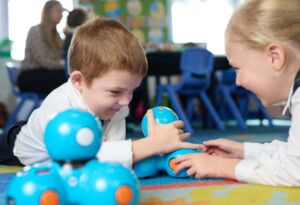
Got vinegar and an egg? Cover the egg in the vinegar for 48 hours and watch the shell dissolve and reveal a bouncy egg! Or mix corn flour and water into a paste to make Oobleck, a great example of a non-Newtonian fluid that is a lot of fun to play with. These fun experiments teach chemical reactions and biological processes effortlessly. Who knew learning could be this fun?Young students practise digital skills with robots in the classroom.

  1. Nature’s lab – …

Music teaching hits the right note

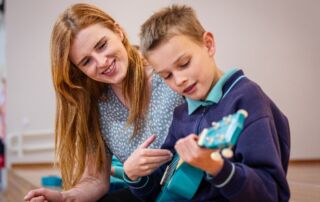
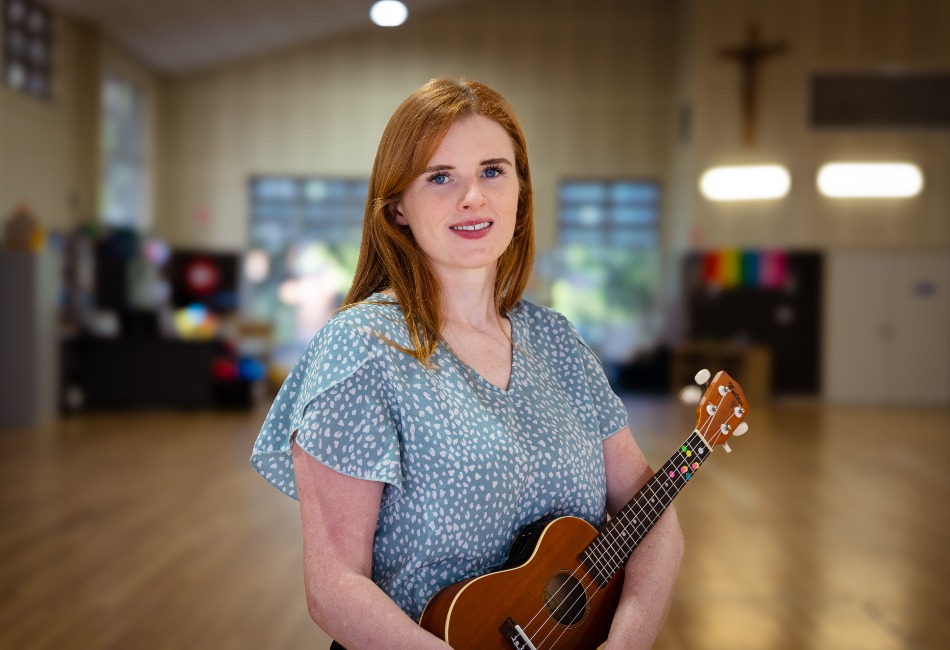
The first tentative thoughts that a career as a music teacher could be for Meaghan Brady came when she forged a strong connection to her ‘amazing’ music teacher during her high school days in Ireland.

Now, a specialist music teacher role at Sydney Catholic Schools is hitting all the right notes for the expat, who has taught at St Therese Catholic Primary School Mascot since January.

“I always knew it was music that I wanted to teach,” Ms Brady said.

“I really connected with my music teacher throughout secondary school. I wanted to be as amazing as she was and to be the same inspiration that she was to me.”

Amadeus Music Education Program classroom teacher Meaghan Brady.The 40-minute lessons Ms Brady delivers for students from Kindergarten to Year 6 allow her to get to know and to teach every student in the school while sharing her enduring love for music.

This and a key part in music-filled school events including masses and graduations, place her at the heart of the St Therese community.

“As a music teacher you always have the opportunity to truly engage with a school and its community,” she said.

“It doesn’t matter if I’m walking down the Kindy corridor or across the school and past Year 6 students, they all know me and I know them. 

“There’s a special connection. They want to talk to you about a band or a song that they really like, or a piano performance they heard on the weekend.”

“As a music teacher you always have the opportunity to truly engage with a school and its community,” – Meaghan Brady

Meaghan’s music lessons cover concepts such as beat, …

Embracing the new International Day of Play

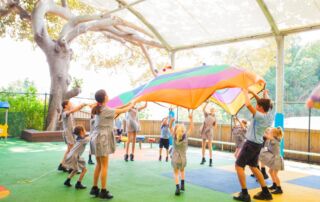
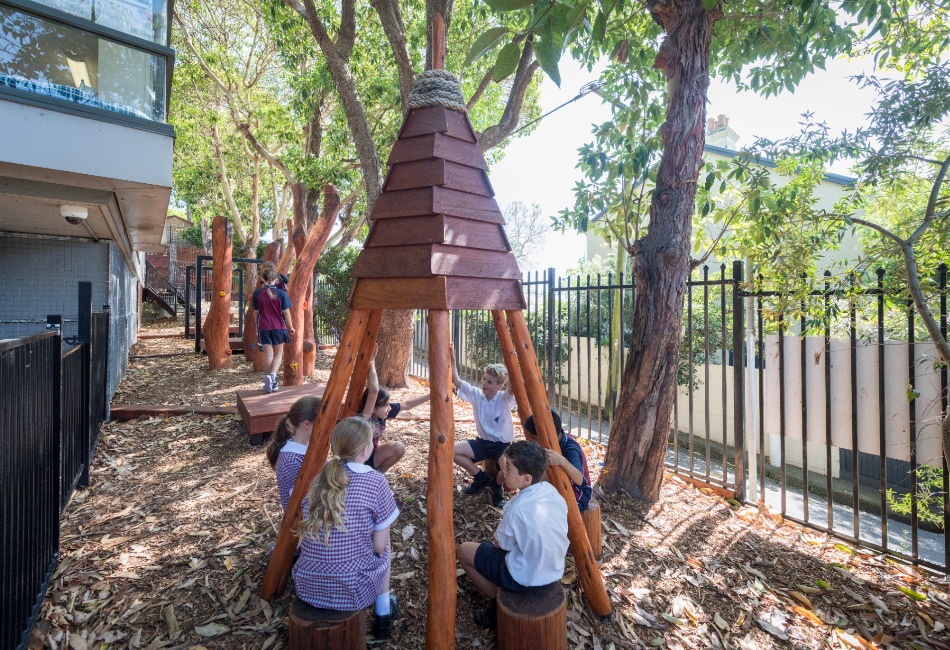
Spilling from a bustling Year 3 classroom to the leafy learning space beyond, students are immersed in creation.

There is chatter, movement, and wonder as they collect and build together with sand, water, blocks, cardboard, clay, leaves, pipes, feathers and more. 

As they flow through the task, the students are the essence of the International Day of Play, a celebration of the universal language of childhood and the creativity it fosters for all ages.

The United Nations’ very first International Day of Play is on 11 June, placing play — and all its benefits — on the agenda of policy makers, communities and education providers around the world.

At Sydney Catholic Schools, play is already valued for the positive impact it has on the learning, development and wellbeing of children of all ages.

“Play immerses children in creating strategies and solving problems,” said Sydney Catholic Schools’ Specialist: Early Years (Pre K- 4) Curriculum, Kim Moroney.

“The joy of play gives them the incentive to develop complex reasoning skills, memory, and concentration.

“Play also ignites flexible thinking which will support children to adapt to whatever life challenges the world has to offer them.”

“Play creates a brain that has increased flexibility and improved potential for learning later in life.” – Kim Moroney

Play ‘a biological necessity’ 

Ms Moroney received the Br John Taylor Fellowship for educational research to study the impact of play on the learning of children in 2017.

Her research took her to Finland, Sweden, Anji County in China, and the University of Cambridge’s Centre for Research on Play in Education, Development & Learning (PEDAL).

Ms Moroney presented her research at The International Play Association’s 2023 World Conference in Glasgow, Scotland.

A peek inside the Kindergarten classroom

With a term of primary school to their name, Kindergarten children are becoming truly settled in their new school routine.

They’ve started to gain confidence as learners and to develop new relationships and friendships.

For a peek at what they’ve been up to inside their new classroom and what lies ahead, read on. 

Inside the classroom

First, know that the Kindergarten classroom is a vibrant and exciting place to be.

“The classroom environment is carefully designed to make each child feel welcome, safe and engaged,” said Sydney Catholic Schools’ Specialist: Early Years (pre-K to 4) Curriculum  Kim Moroney. 

“There is movement, activity, exploration, discovery, conversation, laughter, singing, playing, reading, writing, counting, measuring, calculating, wondering, questioning,  concentration, listening, explanations…the list goes on. 

“Mostly, there is magic!”

Teachers … help children understand that mistakes are OK and help us make new discoveries.” Kim Moroney, Specialist: Early Years Curriculum

Ms Moroney said teachers welcome each child ‘where they are at’ as they start their school experience, gaining an understanding of each child’s needs, talents and unique personality.

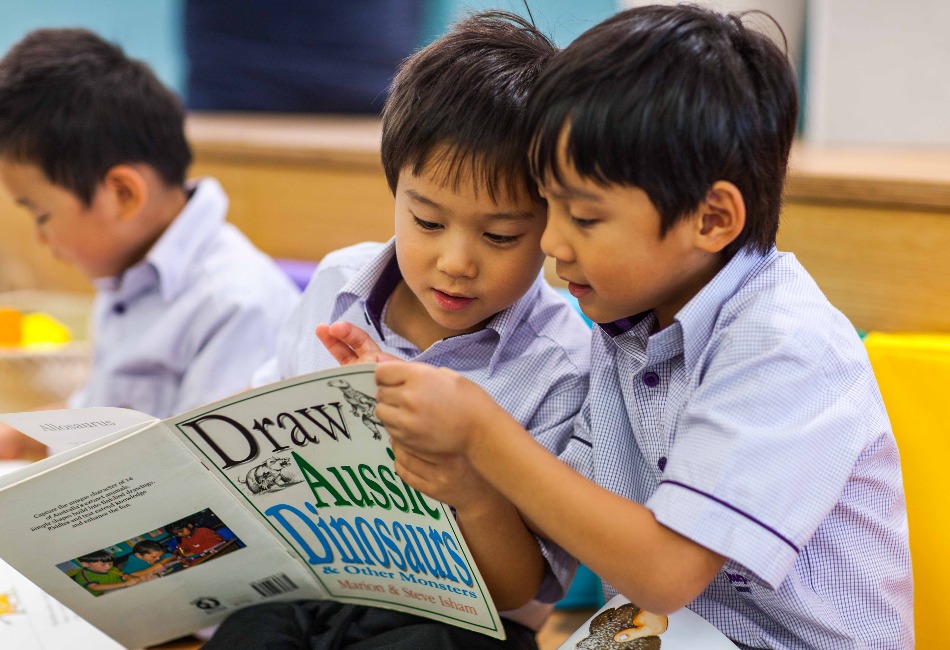
Kindergarten students read a book together.They may teach independence by gradually increasing student autonomy and setting clear expectations.

Children are supported to communicate effectively, self-regulate, and resolve differences or conflicts. Conversations about self-respect, respect for others, kindness and empathy are woven into the fabric of everyday life.

Teachers encourage effort and help children understand that mistakes are OK and help us make new discoveries,” Ms Moroney said.

“They also offer feedback to help children improve and to develop and set achievable goals for success.”

Supporting change

A new level of tiredness or fatigue is common when …

Sophia Program gives new shape to learning

A world-first professional development and action-research program at Sydney Catholic Schools is taking teachers’ skills and students’ academic work in flexible learning environments to new heights.

The Sophia Program was established by Sydney Catholic Schools in collaboration with the University of Melbourne. It supports principals and teachers in the 147-strong network of schools to use space effectively as a teaching tool.

“The data allows our system to make better decisions about the future design of our schools.” – Vivienne Awad, School Design Specialist

“It is common for teachers to move into a newly built space and then have to work out how to operate in it,” said School Design Specialist at Sydney Catholic Schools, Vivienne Awad.

“This presents a huge challenge for teachers as their voice may have been absent in the design process. In this project we are advocating, before we commit to a major build, let’s see that we are utilising spaces well and getting the teaching practice right.”

The program also investigates the impact of learning environments on teachers and students, with a report on the impact of flexible learning spaces on student wellbeing to be released this year.

“To have university researchers collaborating with us to gather data and give it back to us in a form that is user-friendly is fantastic,” Ms Awad said.

“The data allows our system to learn about the factors that schools need for success in these spaces and to make better decisions about the future design of our schools.”

Thriving practice

Regina Coeli Catholic Primary School Beverly Hills’ Year 3 students and teachers were engaged in the program in 2023.

The school’s Leader of Professional Practice, …

How to make Mathematics fun for kids

Mathematics skills are vital to help children make sense of the world.

So how do you ensure they learn and enjoy them?

Here we look at how schools set strong numeracy foundations from Kindergarten, and the activities you can do at home to help your child’s skill, confidence, and appreciation for Maths grow.

Strong foundations

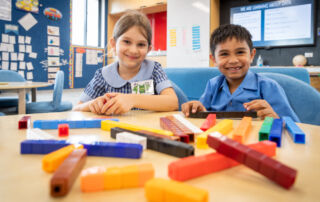
At Sydney Catholic Schools, students in Kindergarten to Year 2 are explicitly taught Mathematics through active learning experiences that link to real-world scenarios.

Numeracy and Mathematics Specialist at Sydney Catholic Schools, Greg Georgiou, said this allows students to practise and apply their knowledge to different situations.

“The role and intent of a Kindergarten Mathematics lesson is for students to develop essential numeracy skills and fluency, while nurturing the ability to think logically, critically and creatively,” he said.

Education Officer: Curriculum (K-6 Mathematics) Maree Cooper agrees. She said Kindergarten children require a lot of practice and active exploration with everyday objects to confidently develop numeracy and Mathematics skills.

“Teachers provide ample time, materials, and high-quality targeted support for children to enhance core skills like matching, sorting, comparing and ordering,” Mrs Cooper said.

“A Kindergarten Mathematics lesson [develops] essential numeracy skills and fluency, while nurturing the ability to think logically, critically and creatively.” – Greg Georgiou, numeracy and Mathematics specialist

The language of Mathematics

Developing a vocabulary specific to Maths at home also helps students thrive in the subject.

Words like high, low, short, long, light, heavy, near, far, first, and last make the list to describe distance, order, and other key concepts.

Your child might also compare quantities using phrases like ‘more than’, ‘less than’ or ‘the same as’. 

“It might take time for your child to use …

ARTEXPRESS: Record success for Sydney Catholic Schools

A record 14 Sydney Catholic Schools graduates have earned a place in HSC visual arts showcase ARTEXPRESS this year, with another eight nominated for the prestigious exhibition.

The selected artworks embrace mediums including ceramics, sculpture, photography, drawing, painting and mixed-media to provide an emotive and considered look at themes including childhood, cultural identity, literature and a rare neurological condition.

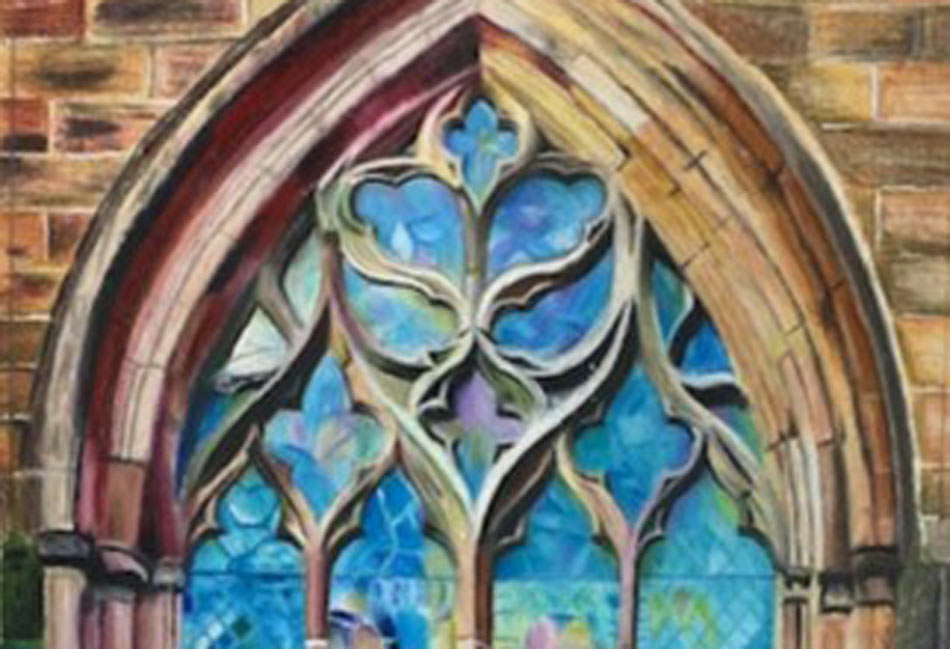
A section of Alyssa Cavallo's HSC Visual Arts major workClancy Catholic College West Hoxton graduate Krovanes Nico’s photomedia series O le a fuga mai (Come into bloom) acknowledges her growing connection to her Samoan heritage.

Aquinas Catholic College Menai graduate Alyssa Cavallaro’s work, Chiese e cattedrali, is an ode to old-world architecture.

“By using coloured pencil in a realistic style in my body of work, my intention is to represent the incredible detail of the old world, detail that our new world is quickly forgetting,” she said.

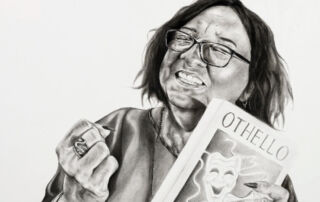
De La Salle College Cronulla graduate’s Sienna Salvato’s charcoal drawings of drama students modelling Shakespeare’s Desdemona and Othello presents “a whimsical take on the idea of Shakespearean tragedy”.

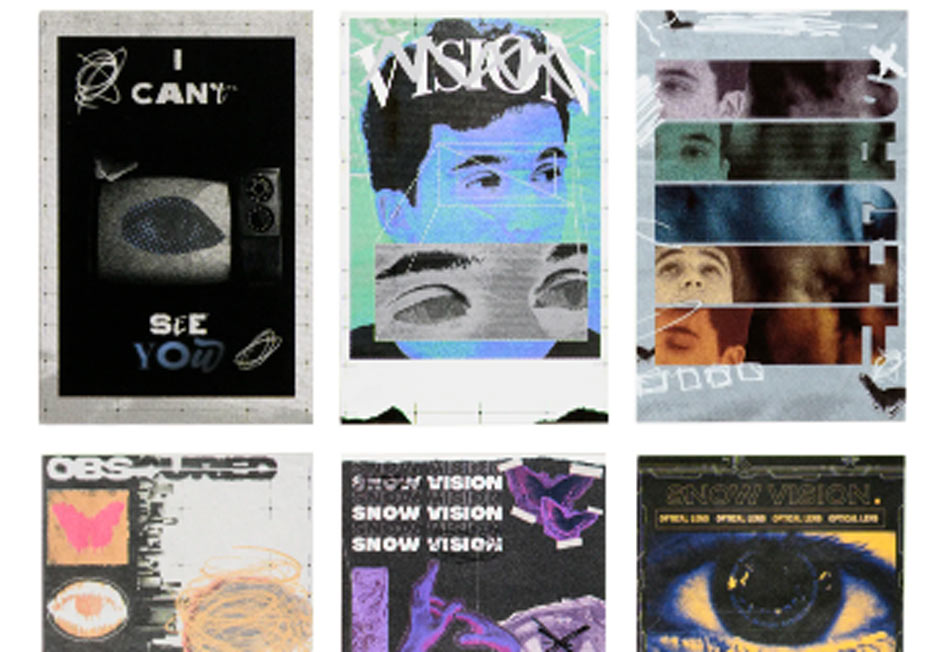
Marist College Kogarah graduate Cristian Varvakis used graphic design and mixed media to represent his emotions around the experience of the rare neurological phenomenon, visual snow. It includes seeing static, coloured dots and auras.

“My work is intended to demonstrate the beauty within the disorientation of my experience of visual snow while challenging perceptions of normalcy, vision and reality,” he said.

 “As an educator, it is incredibly gratifying to see so many students from our system selected for such a celebrated, high-calibre showcase.” – …

Go to Top