(function(w,d,s,l,i){w[l]=w[l]||[];w[l].push({'gtm.start': new Date().getTime(),event:'gtm.js'});var f=d.getElementsByTagName(s)[0], j=d.createElement(s),dl=l!='dataLayer'?'&l='+l:'';j.async=true;j.data-privacy-src= 'https://www.googletagmanager.com/gtm.js?id='+i+dl;f.parentNode.insertBefore(j,f); })(window,document,'script','dataLayer','GTM-MF9T2HG');

Creative spark catches Premier’s notice

When St Michael’s Catholic Primary School Belfield student Leonardo Smith decided to send his creative writing story to NSW Premier, Gladys Berejiklian, he wasn’t expecting much of a response from one of the busiest people in the country.

Yet the Year 2 student was given a pleasant surprise when he received a personal handwritten note from the Premier herself.

“You are such a talented writer!” wrote the Premier. “When you publish your first book please make sure to send me a signed copy!”
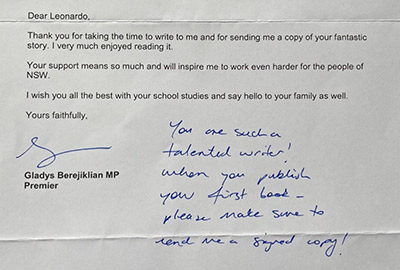
Handwritten note from Gladys Berejiklian The Premier’s handwritten note.

The path to getting noticed

As part of an assessment task on narrative writing, Leonardo had penned a heroic tale about a young girl named Gladys who overcomes a series of obstacles – inspired by the Olympics – to save her kingdom from despair.

Leonardo’s teacher, Emily McKay, said she was blown away by his creativity and thought it would be a great idea to send it to the Premier’s office.

“As I read the story, I thought the Premier would love to read this,” explained Miss McKay.

“I asked Leonardo if he’d like me to send it to her but he said, ‘No, I’ll do it!’”
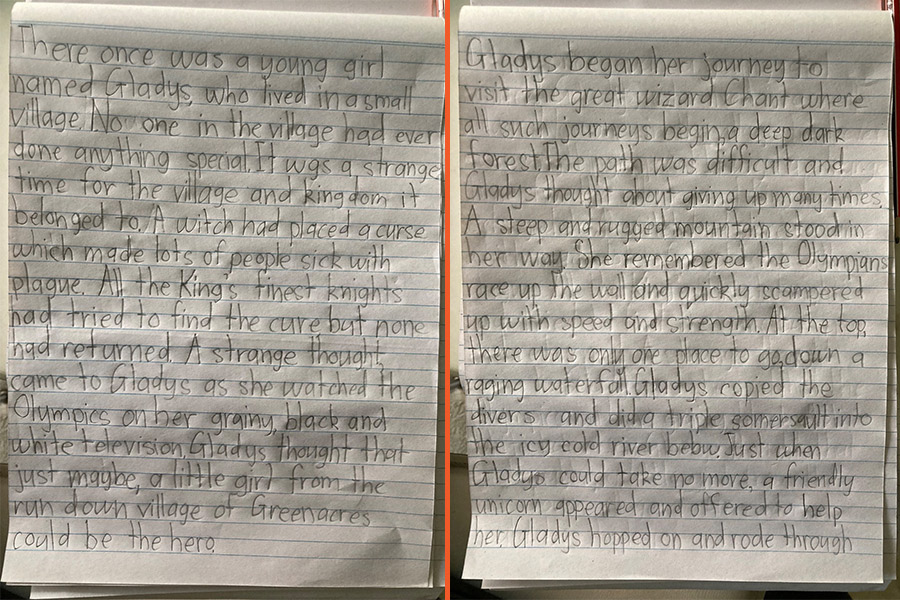
Creative writing story An excerpt from Leonardo’s story.

Mum: ‘We honestly weren’t expecting a reply’

Leonardo’s mother, Laura Smith, said they were taken aback when the letter from the Premier arrived.

“We honestly weren’t expecting a reply at all so when she sent a kind, personalised letter in return Leonardo was very excited,” said Mrs Smith.

“He really loves school; he’s always trying to challenge himself and do his best.”

A deserved reward

Kim McCue, Principal at St Michael’s, said the letter was a deserved reward for Leonardo’s talents.

“We’re just so proud of him; this is an …
September 1, 2021|

K-1 learning for themselves in COVID

Kindergarten students are taking remote learning in their stride, just months after starting their ‘big school’ adventure at Sydney Catholic primary schools. Year 1 students are used to learning online for a while – and are building their independence every day.

Video lessons are a touchstone of students’ day, giving them a chance to grow into independent learners.

They also give families flexibility to complete the 2.5 hours of remote learning a day that the Department of Education has set while COVID-19 pandemic restrictions are in place.

‘STICK TO A DAILY ROUTINE’

Kindergarten students at St Joseph’s Catholic Primary School Rockdale see an enthusiastic video message from their teacher, Romana Lovric, each morning.

It is one part of a daily routine designed to give students consistency.

“Transitioning to home learning with Kindergarten has been both extremely rewarding and challenging at times” – Romana Lovric

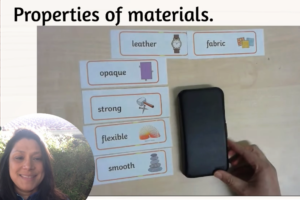
Kindergarten teacher Romana Lovric records a morning video message for her students“When planning remote lessons, I stick to a daily routine so both students and parents know what to expect,” Ms Lovric said.
“Remaining connected with students and their families and their wellbeing has also been a strong focus for me. 

“Each day includes some mindfulness activities, or opportunities to connect with nature in their home setting.”

St Joseph’s Assistant Principal Kylie O’Donnell said activities geared to the home environment have allowed students to explore the world around them “developing resilience, communication and mindfulness.”

LEARNING INDEPENDENCE

Remote learning with the Year 1 teachers of St Michael's Catholic Primary School DaceyvilleKindergarten and Year 1 teachers can count on the curiosity of their students. 

Designing remote lessons has made them mindful of other …

Help keep your child safe online

While educators were adapting their lessons to teach from afar, Sydney Catholic Schools’ (SCS) Child Protection Team had been bracing for these changes by creating remote learning guidelines to ensure young isolated learners are safe in their (home) school.

“Zoom and Google Hangouts are new mediums – it’s quite a novel thing to have your teachers teach into your home,” said psychologist Sandra Reynolds, who has been part of the Child Protection Team since April 2015.

“When used safely, online resources and programs can significantly enhance a student’s understanding of a concept. Children can be easily deceived online, it is far too great a responsibility for them to manage on their own.

“These guided cyber experiences in the classroom allow for exploration to occur within a safe and supervised environment. Simply said, feeling safe makes learning possible.”

Sydney Catholic Schools' psychologist Sandra Reynolds Sydney Catholic Schools’ psychologist Sandra Reynolds. Photo: Kitty Beale

Ms Reynolds said the team based the new remote learning guidelines for parents and teachers at SCS on existing distance education and tele-health videoconferencing models, including those of Alice Springs School of the Air (ASSOA) and the Australian Psychological Society.

“People in remote areas have been accessing tele-health and online learning for a long time,” she explained.

ASSOA, for example, has been broadcasting to children in isolated communities throughout the Northern Territory and parts of South Australia and Western Australia for more than 49 years.

In ASSOA’s 1.3 million square-kilometre “classroom” students take part in online lessons with their classmates and then complete follow-up activities at home, with support from their home tutors (mostly parents).

“Feeling safe makes learning possible” – Sandra Reynolds

Closer to home, the Catholic school system in the Archdiocese of Sydney is educating more than 70,000 students, at different levels of learning, affluence and technological savvy.

“Sydney Catholic …

A School Ahead of the Curve

Why students at this school are already remote learning pros

While learning during COVID-19 has undeniably affected the education sector, it’s been especially challenging for students undertaking practical work in Vocational Education and Training (VET) subjects.

But for Southern Cross Catholic Vocational College Burwood (the College) the leap from on-site to remote learning has been smoother than for most, as the College was already at the forefront of online learning long before the coronavirus arrived.

The College – which is especially for senior students seeking vocational education and training pathways – already had an online one-stop-shop, where course content, work and assessments are housed. Plus, a majority of its VET offerings operated in the digital realm (a Virtual Learning Platform).

“The Virtual Learning Platform allows for real-time interaction between students and learning facilitators,” College principal, Tony Patton, said.

“Each Learning Guide contains Learning Checkpoints, which are designed to measure the students’ progress. They also include interactive quizzes and assignments, used to monitor the level of student mastery. Learning Guides allow for continuous progress as students work at their own pace with the support of our staff.”

COVID-19 has prompted the College to add even more online tools to its toolkit, to monitor student progress, engagement and wellbeing.

Students studying together at southern Cross Catholic Vocational college Burwood before COVID-19 Students studying together at southern Cross Catholic Vocational college Burwood before COVID-19. Photo: Kitty Beale

“This is about more than just online learning during a pandemic. Southern Cross has long been creating innovative systems based on well-researched, best practice for a range of learning and teaching methods” – Southern Cross Catholic Vocational College principal, Tony Patton

The College has introduced Zoom cloud meetings and built an interactive community environment, where teachers are referred to as Learning …

Numeracy in Action

Sydney Catholic Schools is always proud of the great work being done by its staff and students, but never more so than at this unsettling time.

We’ve put together a collection that showcases the creativity and resilience of our teaching and learning communities.

Getting busy with words and numbers

Year 4 students at Holy Spirit Catholic Primary School Carnes Hill have been busy learning about literacy and numeracy.

Projects have included creating their very own shop front (pictured) and managing the daily running of it, including advertising and daily budgets.

Keep on coming back

We’re adding new things to our Showcase section of this site all the time, so be sure to check back in!

Create the Perfect Home Study Schedule

Tips for Getting the Most Out of Remote Learning

Working to an hourly clock may seem like the ‘right’ thing to do, but this approach is putting unnecessary pressure on many at-home parents of primary schoolers.

That is because hourly time frames are more suited to a classroom, according to Dr Kate O’Brien, the Director of Education and Research at Sydney Catholic Schools.

“In primary school, much of the learning is around collaboration and working with others, so there’s a lot of development of oral language skills, social skills and organisational processes,” Dr O’Brien explained.

At home, families are doing a range of things at the same time as learning is happening, so there isn’t that same intense focus on language and social aspects, like in school, she said.

“A school may have a literacy session for an hour a day that explores the skills of the English curriculum,” Dr O’Brien said. In the home, “without the discussion in classroom learning”, a child could do the same in about 20 minutes, she said.

“This is a unique time and an opportunity to build character and the dispositions of learning, such as problem solving, persistence, speaking with accuracy and precision” – Dr Kate O’Brien

Dr O’Brien believes a holistic approach to learning is better suited to primary school students.

She said student activities should include building relationships in the home, communication tasks, and exploring the world around them.

“Cooking a cake, by going through what you need to measure to cook that cake,” suggests Dr O’Brien.

“Write down a procedure for the process or make a video of how to bake, then write about the experience.

“Go for a walk and explore the local environment. Talk along the way, share stories of your childhood and create memories for the future.

“Use the time to create positive memories for the future and …

Go to Top