(function(w,d,s,l,i){w[l]=w[l]||[];w[l].push({'gtm.start': new Date().getTime(),event:'gtm.js'});var f=d.getElementsByTagName(s)[0], j=d.createElement(s),dl=l!='dataLayer'?'&l='+l:'';j.async=true;j.data-privacy-src= 'https://www.googletagmanager.com/gtm.js?id='+i+dl;f.parentNode.insertBefore(j,f); })(window,document,'script','dataLayer','GTM-MF9T2HG');

Kindergarten, Here We Come! A Parent’s Guide to Orientation

For children starting school next year, the countdown to big school is officially on. 

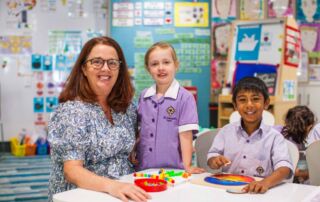
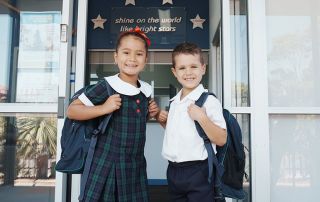
Kindergarten Orientation gives children and families their first opportunity to experience school life before the first day. From meeting teachers and future classmates to exploring the classroom and playground, Orientation helps children become familiar with their new environment in a fun and welcoming way. 

At Sydney Catholic Schools, Orientation programs are designed to help children and families feel connected, informed and excited about the journey ahead. 

Read on to discover what you can expect at Kindergarten Orientation. 

Hello, new friends! 

One of the highlights of Orientation is meeting the people who will be part of your child’s school experience. 

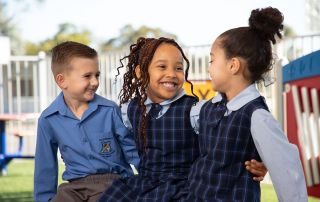
Children spend time with their Kindergarten teachers, meet future classmates and, at many schools, are introduced to older student buddies who help them feel welcome. 

By the time the first day arrives, there are already familiar smiles waiting for them. 

What happens during Orientation? 

Orientation is filled with fun, age-appropriate activities that introduce children to their new learning environment.  

There might be a story on the mat, a song to sing, something to create or a new game to play. Along the way, children get to explore their classroom, join in group activities and discover that learning at big school can be lots of fun. 

Parent Tip: Instead of asking “Did you have fun?”, try “What was your favourite thing about your new classroom?” or “Who did you meet today?” You might get a little more than a one-word answer! 

Getting Ready for School Life  

Orientation also introduces children to some of the routines they’ll experience when school begins. 

From finding their …
Starting Kindergarten: Helping your child thrive!

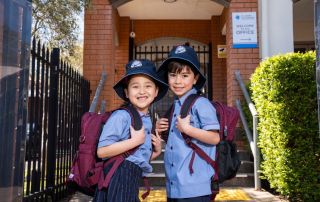
So the big day is fast approaching: starting Kindergarten. Your little one is about to step into the brave new world of uniforms, bells and assemblies, snack-time negotiations, learning to read and write, and (gulp) homework. 

And you? You’re preparing for one of the biggest parenting milestones – watching your baby take those first steps into “big school.”

It can feel a little overwhelming for everyone, but with the right support (and a few tried-and-tested tips), the transition can be filled with excitement, smiles, and a healthy dose of anticipation for what’s ahead.

1. Pack the comfort kit

Every superhero needs a cape…and every Kindergarten child needs a comfort kit. This might be a favourite teddy, a small family photo, or a little trinket they can keep tucked in their pocket. It’s their reminder that home is never far away.

2. Talk about school in a positive light

Sydney Catholic Schools Early Years Curriculum Specialist, Kim Moroney, suggests that, when we talk to children about starting school, it’s best to do so in a positive, natural way.

“We don’t want to build it up as the most amazing thing ever, because that can feel like a lot of pressure,” she says. “Our goal is to help children feel secure, supported, and joyful about starting school.” 

For example, instead of saying “You’re going to have the best time ever at school!”, parents might say, “You’ll get to meet new friends, play games, and learn lots of interesting things.” This helps set realistic expectations while keeping the focus positive and reassuring.

3. Practise the morning routine

Nobody enjoys a first-day scramble with socks missing in action and lunch boxes still in the dishwasher. Try a practice run: backpack on, shoes tied (ish), and …

From Concerts to Christmas: End the Year with Gratitude and Joy

As 2025 winds down and with Christmas on the horizon, it’s the perfect time to take a deep breath and look back on the year that’s been.

The end of term can feel like a blur of concerts, assemblies and lunchbox leftovers but it’s also a golden opportunity to help children pause, reflect and celebrate how much they’ve grown. Here are some simple (and fun) ways to do it as a family! 

Celebrate the wins (big and small)

Encourage your child to celebrate both the big achievements and the little victories, the ones that don’t always make it into school reports. 

  • For little ones (Kindy–Year 2): Ask: “What was something new you learned this year that made you smile?” Draw or make a certificate for their proudest experience
  • For primary kids: Create a Top 3 list: best school memory, best learning moment, best friendship moment. You can also decorate a scrapbook or add photos from the year
  • For teens: Chat about challenges they’ve overcome. It could be a tough subject, a school event, or balancing sport and study. Encourage reflection during a walk or dinner conversation

Practice gratitude together 

Take some time to give thanks for what the year has brought. Gratitude not only lifts the mood, it builds perspective and joy.

  • For little ones: Keep it simple. Ask, “What made you feel happy or thankful today?” It could be as small as playing with a friend or as big as visiting grandparents
  • For primary kids: Start a family “gratitude jar” and fill it with notes of thanks for people or memories from the year. Reading them aloud on …

Ready, Set, School! Kindergarten Orientation

So, your child is about to start big school. Deep breath. This is the moment you’ve probably been equal parts dreading and dreaming about – the leap from preschool to primary. But before the uniforms are ironed and the lunchboxes are packed, there’s a magical time designed to make the transition smoother: Kindy Orientation.

Orientation is the perfect sneak peek into school life. Here’s what you can expect:

Meet the Crew: Teachers, Buddies & Future Besties

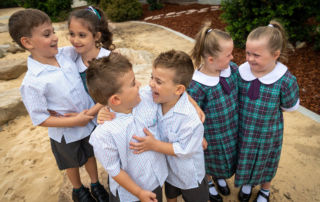
One of the best parts of Kindergarten Orientation? Your child gets to meet the people who will shape their school days – from their classroom teacher to future classmates and even a friendly Year 6 buddy who’ll be there to lend a hand (or a high-five) when school officially begins.

These early introductions are more than just cute photo ops — they’re the first steps in building trust, social confidence, and a sense of belonging.

Caroline Boulis, Principal at St Pius’ Catholic Primary School Enmore, highlights just how important this is:

“The social aspect of Kindergarten is so crucial. Orientation allows children to work on essential skills like cooperation and communication, and form friendships that will help them navigate the challenges of starting school.”

These early connections help children feel supported and less alone, making the transition from preschool to primary feel less like a leap — and more like a natural next step.

Play-Based Prep (AKA Learning in Disguise)

Orientation is all about fun, not formalities. Expect hands-on activities like drawing, storytelling, building blocks, and classroom games carefully designed to help children settle in and feel at home.

When kids are having fun, they forget to be nervous. Win-win.

Routines, Rules & Recess

From drop-offs and bell times …

September 30, 2025|

Helping your little person make big, brave, excited steps into Kindergarten

I’m not crying, you’re crying! Watching your little one head off to kindergarten for the first time is a big moment with big emotions. Starting ‘big school’ is an exciting milestone—for your child and for you! But let’s face it, it can also feel a little overwhelming. With a few fun activities, you can help your child march bravely into this new chapter and make their first days of school the start of a joyful adventure.

Here are our three favourite ways to get ready for Kindergarten at home.

1. Start Building Familiarity

Kindergarten is a big adventure, and a little preparation can go a long way in helping your child feel excited and ready to start school. Visit the school together to make it familiar, and practice packing and using their lunch box, perhaps on a fun picnic. Talk about the exciting activities ahead, like art projects, storytime, and making new friends. By building excitement and familiarity, you’ll help your child step confidently into this new chapter.

2. Create Connections Early

The social side of school is a huge part of the experience! Orientation days are a great opportunity for your child to meet their teacher and classmates, making their official first day less of a challenge. After Orientation, you might even mark the first day of school on the calendar as a countdown to something amazing.

3. Play ‘School’ at Home

Want to make learning fun? Turn your living room into a mini-classroom! Set up a pretend school, with you as the teacher and your child as the student (and vice versa!). This kind of imaginative play helps your child role-play the kinds of activities, routine and structure they’ll encounter at school—and shows them that learning …

Kindergarten Orientation: Everything You Need To Know

Kindergarten marks the beginning of an exciting time where your child will take their first step on a journey of lifelong learning. That step can be a big one though and so it helps to have a head start—that’s where Kindergarten Orientation comes in.

Here’s what to expect from Orientation and why it’s so valuable in preparing your child for primary school.

Easing the transition—for children and families alike!

From lunchtime routines and uniform protocols, to classwork and playground life, Kindergarten Orientation helps gently introduce new concepts that may be different from preschool or daycare.

Kevin Bryson, Principal at Fr John Therry Catholic Primary School Balmain/Rozelle, says Orientation soothes any anxieties children and families may have, and gives them time to adjust before the start of the year.

“At our Orientation for example, while our teachers make students feel at home in the classroom, we also speak to parents and carers, welcoming them into their new community and answering any questions they might have,” he says.

“The focus is on having the whole family feeling more prepared and confident for the year ahead”

Building teacher and peer connections

Orientation is where your child will first meet their new teacher, classmates and Year 6 buddy.

They will begin to establish an all-important trust with their Kindergarten teacher and other educators, and get to know the peers they will learn alongside for the next seven years.

“The social aspect of Kindergarten is so crucial,” says Caroline Boulis, Principal at St Pius’ Catholic Primary School Enmore.

“Orientation allows children to work on essential skills like cooperation and communication, and form friendships that will help them navigate the challenges of starting school”

Learning …

A peek inside the Kindergarten classroom

With a term of primary school to their name, Kindergarten children are becoming truly settled in their new school routine.

They’ve started to gain confidence as learners and to develop new relationships and friendships.

For a peek at what they’ve been up to inside their new classroom and what lies ahead, read on. 

Inside the classroom

First, know that the Kindergarten classroom is a vibrant and exciting place to be.

“The classroom environment is carefully designed to make each child feel welcome, safe and engaged,” said Sydney Catholic Schools’ Specialist: Early Years (pre-K to 4) Curriculum  Kim Moroney. 

“There is movement, activity, exploration, discovery, conversation, laughter, singing, playing, reading, writing, counting, measuring, calculating, wondering, questioning,  concentration, listening, explanations…the list goes on. 

“Mostly, there is magic!”

Teachers … help children understand that mistakes are OK and help us make new discoveries.” Kim Moroney, Specialist: Early Years Curriculum

Ms Moroney said teachers welcome each child ‘where they are at’ as they start their school experience, gaining an understanding of each child’s needs, talents and unique personality.

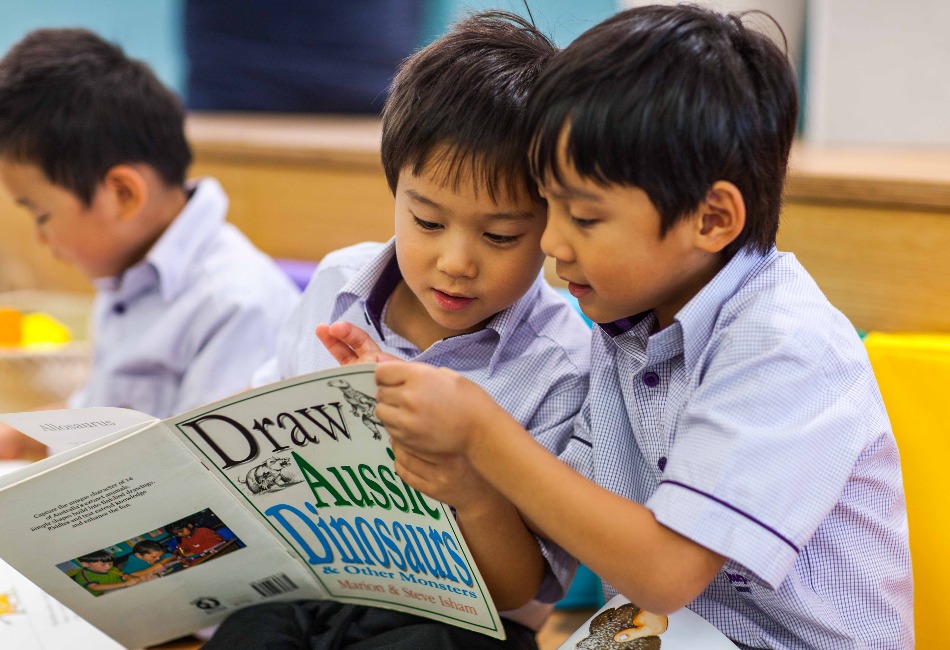
Kindergarten students read a book together.They may teach independence by gradually increasing student autonomy and setting clear expectations.

Children are supported to communicate effectively, self-regulate, and resolve differences or conflicts. Conversations about self-respect, respect for others, kindness and empathy are woven into the fabric of everyday life.

Teachers encourage effort and help children understand that mistakes are OK and help us make new discoveries,” Ms Moroney said.

“They also offer feedback to help children improve and to develop and set achievable goals for success.”

Supporting change

A new level of tiredness or fatigue is common when …

Kindergarten: What to expect in the first year of school

Starting primary school is a huge milestone for both children and their families. It marks a time of excitement, growth, and new experiences. Here’s what you can expect in your child’s first year of school.

What they’ll learn

The first year of primary school focuses on learning foundational skills in literacy and numeracy as specified in the curriculum provided by the NSW Education Standards Authority (NESA).

  • Literacy in Kindergarten involves speaking, listening, reading, and writing. Students learn how to follow directions, take turns, ask questions and develop a knowledge of words.

They learn new vocabulary, to form letters, write words and sentences, follow print conventions, and begin to read short books.

  • Numeracy in Kindergarten involves understanding how numbers work. Your child may count up to 30 (and sometimes backward),  identify numerals and their quantities, and learn how to add, subtract, and describe size, time and patterns.

They may also recognise and name two and three-dimensional shapes, and develop spatial awareness and the vocabulary to describe mathematical concepts.

“Your child will also be exposed to a range of quality literature,” said Curriculum & Innovation Specialist at Sydney Catholic Schools, Maryanne Thorne.

“Don’t be surprised if your child comes home excited to share new knowledge or practise skills as they begin to read and write.”

A small amount of homework may become a part of your child’s routine. 

“It’s usually a light review of classroom learning,” Ms Thorne said. “Create a quiet and comfortable space for homework, and encourage a positive attitude toward completing tasks independently.”

Emotional growth

The first year of school is also a time of significant emotional growth. Your child will learn to navigate different emotions, express …

Kindergarten: Four tips for a successful start

Of all the milestones in early life, starting kindergarten can be one of the most exciting – and nerve-wracking – for parent and child alike.

Below are four factors to consider for a smooth transition from daycare and home to a larger, more structured primary school environment.

Timing

While there is no national starting age for kindergarten, in NSW children are expected to attend by the year they turn 6.

A child’s social and emotional needs, as well as how they cope with change, often trump academic readiness in the decision-making process.

“It depends on the child, the family, the advice from the early childhood service,” said Kim Moroney, Specialist: Early Years (K-4) Curriculum at Sydney Catholic Schools.

“Some children are excited to leap into the next stage of their life, but for others that is more challenging. It’s different for everybody.”

“Schools are very proactive in welcoming and reassuring families.” – Kim Moroney, Specialist: Early Years (K-4) Curriculum

Familiarity

It can be natural for a child to miss their old routine as they adjust to a new one at primary school.

Taking photographs of the classroom, playground, office and teacher (with permission!)  during orientation and talking about them with your child can help familiarise them with their new environment ahead of time.

Developing their vocabulary around school and familiarity with school items such as lunchboxes, shoes, hat, and backpack – and when and how they are used – is also helpful.

“The most important thing when children are transitioning to school is for them to have a sense of connection, and of belonging to the school,” Ms Moroney said.

“Having conversations with your child about school and how they are feeling is invaluable.”

Social and emotional …

Remote learning in Kindergarten

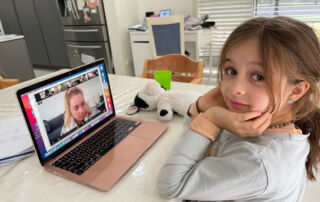
The kindergarten cohort at St Anthony of Padua Catholic Primary School Austral had just got settled into their ‘big school’ routines when the latest COVID-19 lockdown came into effect.

School principal, Lea De Angelis, acknowledged it’s been tough for the school’s youngest group moving to remote learning when they are just barely used to being in a classroom.

She said staff at St Anthony have worked hard to ensure the transition has been as smooth as possible for everyone.

“Remote learning is difficult for everyone, especially for Kindergarten students and their families who had just fully settled into the routines of school before everything changed,” Ms De Angelis said.

“We know that more than anything, small children miss the social interactions they have with their friends and teachers each day”  – Principal Lea De Angelis

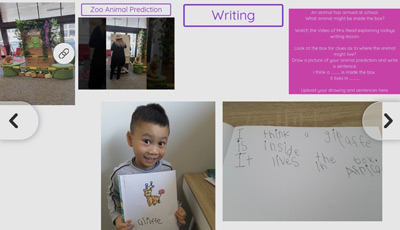
Ms De Angelis said Seesaw was the main tool used for remote learning in Kindergarten, “as students are well versed in using the platform during normal class time.” 

“Students can post their responses to tasks with teachers providing feedback everyday,” she said.

“Zoom is used a few times each week in order to allow students to interact with each other and with their teachers.”

Ms De Angelis thanked and praised all her parents for handling the challenges of homeschooling “wonderfully.”

“We understand that many parents are also working from home while supervising remote learning,” Ms De Angelis said.

“We emphasise the importance of wellbeing – taking regular breaks and only completing the tasks which are manageable for both students and parents” – Ms De Angelis

About St Anthony of Padua Catholic College Austral

Writing over zoom Writing over zoom
St Anthony of Padua Catholic College Austral is the only comprehensive Preschool to …

September 16, 2021|

Three sets of twins start school

Teachers were seeing double at St Anthony of Padua Catholic College Austral at the start of this school term.

Principal Lea De Angelis said the school has welcomed three sets of Kindy twins, who couldn’t be more excited to go to “big school.”

Asked to explain why he was thrilled to be at school, five-year-old Charlie Tannous said: “Because we get to see our favourite people.”

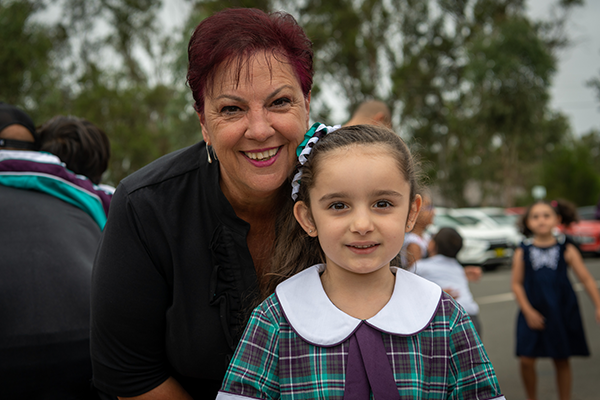
St Anthony of Padua Catholic College Austral principal Lea De Angelis with one of the school's new Kindy students. St Anthony of Padua Catholic College principal Lea De Angelis with one of the new starters.

His sister, Matilda, nodded her head in agreement.

They spoke of friends they’d made at Preschool.

Sisters Savannah and Sophia Smith, also aged five, said they looked forward to playing at school and making new friends.

Four-year-old twins Christian and Sebastian Pittorino reflected happily on the Kindy “practice days” they had attended at St Anthony before the official first day of school.

“We got to play outside,” Sebastian recalled.

The boisterous triple-doubles are among 119 Kindergarteners to join St Anthony of Padua in 2021, and 6000 Kindergarteners taking the next step of their learning journey at a Sydney Catholic school.

Gallery: First day of school

St Anthony of Padua Catholic College is the only comprehensive Preschool to Year 12 Catholic school within the beating heart of the Western Sydney Aerotropolis.

The co-educational school is being built in six stages on a picturesque 10.9-hectare parcel of land within the newly revitalised community of Austral.

“There is a strong sense of pride among our staff, students and parents in building the college from the ground up, and contributing towards creating the culture and traditions of St Anthony of Padua Catholic College Austral,” Ms De Angelis said. Helpful school readiness tips …

February 1, 2021|

Get your child ready to start school

Sending your child to “big school” can be nerve-wracking, especially when it’s your first child taking that exciting step. But our experts say it doesn’t have to be.

Choosing the right start date for your child, ensuring they’re socially ready, preparing them to learn well and setting up the best possible routine for them from the very beginning, are all simple ways to make sure they shine in Kindergarten and beyond.

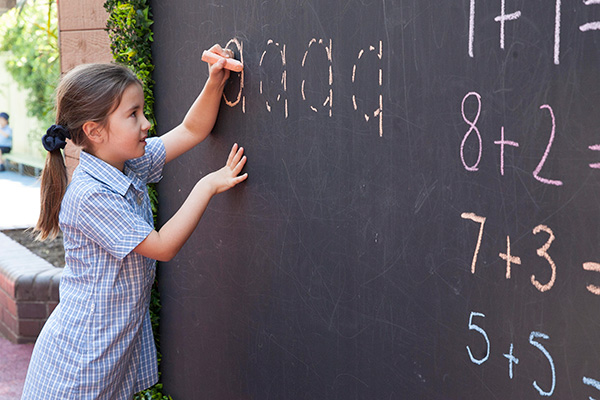
A young girl in school uniform writes words on a chalk board In NSW, kids can start Kindy at the start of the school year if they turn 5 on/before 31 July.
The right time to start

“Deciding the best age to send your child to school can be tricky,” said Sue Sinko, Sydney Catholic Schools’ early education expert and a former principal.

In NSW, kids can start Kindy at the beginning of the school year if they turn five on or before 31 July that year. By law, they must be in compulsory schooling by their 6th birthday.

“The decision about when is the best time for your child to start school is an individual one,” Ms Sinko said.

“Starting school at six, instead of five, can give some children an extra year to mature and become more independent. For other children, it won’t be of great benefit.”

Sydney Catholic Schools’ early education expert and former principal, Sue Sinko Sydney Catholic Schools’ early education expert, Sue Sinko. Photo: Kitty Beale

Ms Sinko recommends discussing the right time to start with people who know your child well and who understand the school system. This can include your child’s preschool educators.

“Deciding when your child should start school should not rest entirely on your child’s academic skills,” she said.

“Teachers say that academic skills are …

Go to Top