
(function(w,d,s,l,i){w[l]=w[l]||[];w[l].push({'gtm.start': new Date().getTime(),event:'gtm.js'});var f=d.getElementsByTagName(s)[0], j=d.createElement(s),dl=l!='dataLayer'?'&l='+l:'';j.async=true;j.data-privacy-src= 'https://www.googletagmanager.com/gtm.js?id='+i+dl;f.parentNode.insertBefore(j,f); })(window,document,'script','dataLayer','GTM-MF9T2HG');

Helping Indigenous students kick post-school goals

Sydney Catholic Schools has partnered with the NRL School to Work program to increase our Aboriginal and Torres Strait Islander students’ success in the classroom and assist in their transition from school to tertiary education. Here Jane Bridges, SCS’ Wellbeing Specialist: Aboriginal and Torres Strait Islander students, explains how the partnership is helping to make a difference in our young students’ lives.  
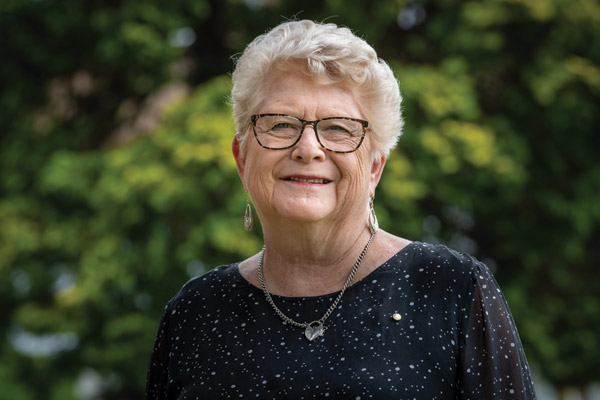
Sydney Catholic Schools’ student wellbeing specialist, Jane Bridges Sydney Catholic Schools’ Student Wellbeing Specialist, Jane Bridges. Photo: Kitty Beale

As Sydney Catholic Schools prioritises success and excellence for our Aboriginal and Torres Strait Islander students, we look to our partnerships with programs such as NRL School to Work to help ensure that we are catering to the needs of all, and achieving the best possible outcomes for each individual student. 

The NRL School to Work program was started in 2012 in response to closing the gap in Indigenous disadvantage in employment and education outcomes across the Western Sydney region. 

Since then the program has extended beyond servicing Western Sydney to schools across Victoria, NSW, the ACT and south east Queensland with more than 95 per cent of participants transitioning into education and employment after graduating from school. 

Sydney Catholic Schools has recognised the impact of this program and has continued to extend the opportunity to SCS secondary colleges. 

In 2021 there are 34 active students in the program across 11 SCS high schools. 

The young Aboriginal students in the program are provided with access to a number of workshops, leadership camps and the support of an Indigenous mentor. This support includes job readiness guidance and support in the job application process. 

The workshops and mentors also assist …
July 5, 2021|

Celebrating 64 Indigenous graduates

As we celebrate with our 64 Year 12 Aboriginal and Torres Strait Islander 2020 alumni, Southern Cross Catholic College (SCCC) alumnus Anthony Carter-Rankine has an especially unique story to tell.

For the first time in more than a decade, a remote indigenous community in the Northern Territory has a Year 12 graduate.

Anthony Carter-Rankine, from Ti Tree – the closest town to Alice Springs – is only the second ever male in the region to have completed their Higher School Certificate (HSC).

The Southern Cross Catholic College (SCCC) alumnus also gained a First Aid Certificate before graduating, and has since secured a job at the Central Desert Regional Council.

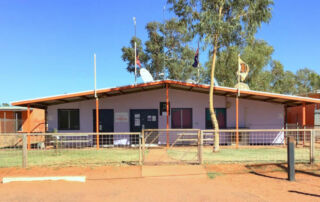
Ti Tree in the Northern Territory Ti Tree in the Northern Territory, Anthony Carter-Rankine’s home.

“SCCC helped me gain my HSC and also some VET (Vocational, Education & Training) qualifications,” Anthony said. “By doing short courses, as well as securing part-time work, it helped me learn lots of skills that will assist me with my new job.”

Jane Bridges, Sydney Catholic Schools (SCS) Wellbeing Specialist: Aboriginal and Torres Strait Islander students, applauded Anthony’s determination and perseverance.

“Anthony’s story is a tribute to himself and a great testament to SCS’ commitment to the education of young Aboriginal students” – Jane Bridges

“The barriers that Anthony faced were profound and were compounded by COVID,” Ms Bridges said.

“I pay tribute especially to his home community for trusting Anthony to the care of SCS and to the teachers that worked with him and the organisations that partnered with his school.”

The long road to completing the HSC

Anthony arrived at SCCC in Term 4 of 2019 from Ti Tree, a town with 110 people, according to 2016 Census figures.

For Anthony to complete Year 12, he had to give up many things and overcome many …

Support for Indigenous students

Meet the Sydney Catholic Schools (SCS) alumna making a difference in Aboriginal students’ lives.

Jane Bridges, SCS’ Wellbeing Specialist: Aboriginal and Torres Strait Islander students, said she felt very proud to work for SCS in Aboriginal education.

A Ngunawal woman, from the Bell line of family from Yass, she helps teachers at SCS learn from families about the background, aspirations and strengths of their Indigenous students, in partnership with her colleague, Adam Daniels, who is the Aboriginal and Torres Strait Islander Community and Student Liaison Officer at SCS.

“Sydney is one of Australia’s biggest and fastest-growing Indigenous population hubs and SCS has responded to the requests of families to educate Aboriginal and Torres Strait Islander students in a Catholic tradition,” Ms Bridges said.

Today there are 1093 Aboriginal students enrolled in SCS schools (40 more than in 2020), including at least 77 students who will sit their HSC this year.

“SCS is currently working on a focus of developing Aboriginal Studies in Stages 5 and 6 for all students and a Cultural Competency program is already accessible by all staff,” Ms Bridges said.

“As a system of schools we are enriched by the stories and spirituality that Aboriginal people bring to us daily.”

“The work that is being done is life-changing for individuals and Aboriginal families,” Ms Bridges said.

Other ways SCS supports Aboriginal and Torres Strait Islander students to succeed:

  • All Aboriginal and Torres Strait Islander students are given personalised learning plans that engage with student and family goals. “The plans are dynamic and focus on success,” said Ms Bridges.
  • The staffing allocation model (SAM) is used by schools to support strategies to focus on the literacy and numeracy needs of each student, including extension.
  • Pathways through VET. “These have had significant implications for improving retention and HSC completion rates,” Ms Bridges said.
  • Partnerships with external …
Go to Top