(function(w,d,s,l,i){w[l]=w[l]||[];w[l].push({'gtm.start': new Date().getTime(),event:'gtm.js'});var f=d.getElementsByTagName(s)[0], j=d.createElement(s),dl=l!='dataLayer'?'&l='+l:'';j.async=true;j.data-privacy-src= 'https://www.googletagmanager.com/gtm.js?id='+i+dl;f.parentNode.insertBefore(j,f); })(window,document,'script','dataLayer','GTM-MF9T2HG');

How music builds a healthy brain

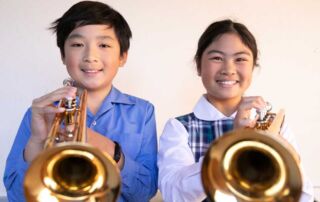
The benefits of learning a musical instrument begin well before your child is playing sweet melodies with ease and enjoyment.

Research has shown that each tentative note can strengthen neural pathways in the brain and lead to learners who are more confident, resilient and self-aware.

The planning, monitoring, discipline and self-evaluation involved in mastering an instrument can be applied in other school subjects and areas of life.

Danielle Fuller, Sydney Catholic Schools’ Manager: Performing and Visual Arts, believes an arts-rich education from an early age can develop students’ creativity and self-expression and increase their motivation to learn.

This has a positive impact on school attendance rates, academic outcomes, and wellbeing.

A total brain ‘workout’

“Playing an instrument may be one of the best ways to help keep the brain healthy,” Mrs Fuller said.

Instruments like the violin, which require the right hand to do something different to the left, engage the peripheral nervous system which controls gross and fine motor skills.

The brain’s executive function, which plans and makes decisions, kicks in as a musician plays one part but keeps focus on the next.

“Couple that with the total sensory input – visual, auditory, and emotional all at the same time – and it becomes a total workout for the brain,” Ms Fuller said.

Embracing excellence

Sydney Catholic Schools supports students to grow their creative talents through collaboration with a range of industry experts from prestigious organisations including Opera Australia and Sydney Conservatorium of Music  – part of the trailblazing Amadeus Music Education Program

The program gives all students in years 3 to 8 at a Sydney Catholic school equitable access to instrumental tuition …
Five benefits to school-aged sport

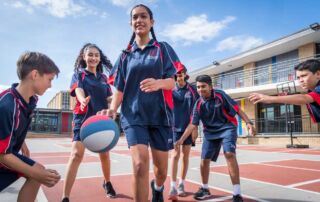
The health benefits of sport for young people are so often expressed it’s easy to forget just how profound their impact.

Here are five reasons why sport is a first-rate way to encourage healthy bodies, minds, and skills for life.

Healthy bodies

Australia’s physical activity guidelines recommend children aged 5 to 17 do at least 60 minutes of moderate intensity physical activity each day.

These valuable minutes come with many health benefits according to Australia’s national wellbeing framework for learning communities including Sydney Catholic Schools.

Physically, sport provides an outlet for excess energy, encourages better quality sleep and improves motor skills such as balance and coordination.

“You’re more productive if you are physically healthy,” said Sydney Catholic Schools’ Manager: Pre-Post Sport, Damien Kerr.

“To get physically healthy you must participate in regular physical activity and then it is a self-perpetuating cycle.”

Healthy minds

The mental benefits are also impressive. Sport leads to improved blood flow to the brain and higher levels of serotonin and endorphins – neurotransmitters which help regulate and improve our emotional state.

This can boost mood, concentration and alertness – all of which influence learning and academic achievement.

“Regular inter-school sport is a way for students to get … all those benefits that come from playing in a team sport,” – Damien Kerr, Manager: Pre-Post Sport

Confidence

Prepare for your child’s confidence to soar when they clock some of their recommended physical activity through sport.

“You can see success through sport very quickly, whether that is the result at the end of a game, or you note your skills are getting better as …

Kindergarten: Four tips for a successful start

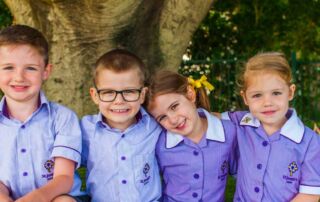
Of all the milestones in early life, starting kindergarten can be one of the most exciting – and nerve-wracking – for parent and child alike.

Below are four factors to consider for a smooth transition from daycare and home to a larger, more structured primary school environment.

Timing

While there is no national starting age for kindergarten, in NSW children are expected to attend by the year they turn 6.

A child’s social and emotional needs, as well as how they cope with change, often trump academic readiness in the decision-making process.

“It depends on the child, the family, the advice from the early childhood service,” said Kim Moroney, Specialist: Early Years (K-4) Curriculum at Sydney Catholic Schools.

“Some children are excited to leap into the next stage of their life, but for others that is more challenging. It’s different for everybody.”

“Schools are very proactive in welcoming and reassuring families.” – Kim Moroney, Specialist: Early Years (K-4) Curriculum

Familiarity

It can be natural for a child to miss their old routine as they adjust to a new one at primary school.

Taking photographs of the classroom, playground, office and teacher (with permission!)  during orientation and talking about them with your child can help familiarise them with their new environment ahead of time.

Developing their vocabulary around school and familiarity with school items such as lunchboxes, shoes, hat, and backpack – and when and how they are used – is also helpful.

“The most important thing when children are transitioning to school is for them to have a sense of connection, and of belonging to the school,” Ms Moroney said.

“Having conversations with your child about school and how they are feeling is invaluable.”

Social and emotional …

Go to Top